
American Mastiff
The American Mastiff is a dog breed developed by crossing the Anatolian Shepherd and the English Mastiff. The American Mastiff combines the best qualities of a guard dog and a family dog. A giant breed, it requires rigorous training and professional supervision.
Content
History of origin
The American Mastiff was developed by Frederick Wagner of Piketon, Ohio. The breeder's goal was to create a dog with the temperament and appearance of the English Mastiff, but with fewer health problems and drooling. The original breeds were English Mastiff And Anatolian Shepherd DogThe American Mastiff was recognized by the Continental Kennel Club in 2000. Since then, only puppies registered with the CKC are considered purebred. The Fédération Cynologique Internationale (FCI) does not recognize the breed and considers it a common English Mastiff crossbreed.
Appearance
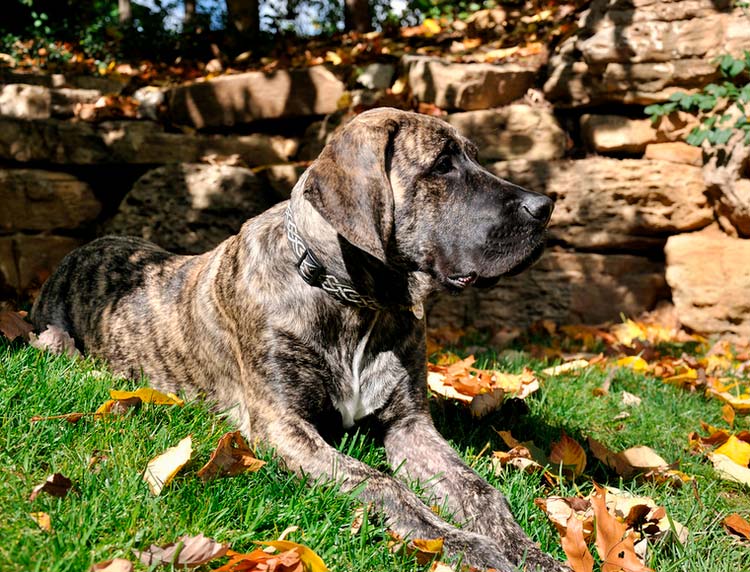
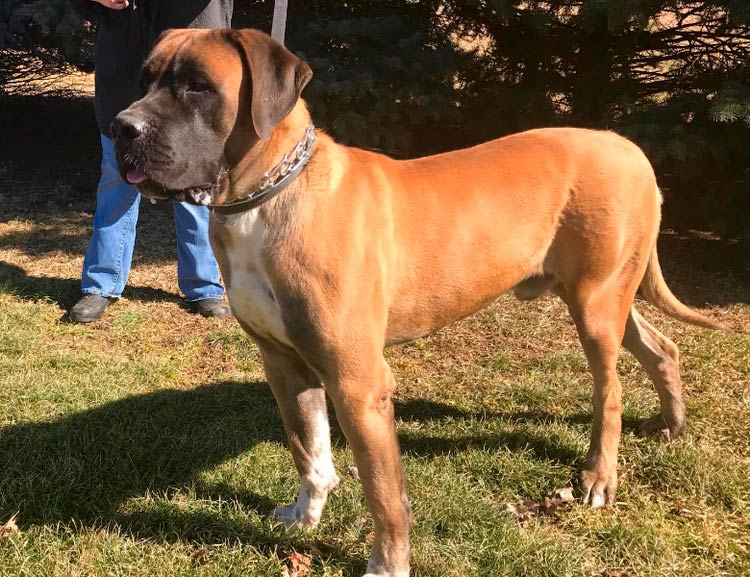
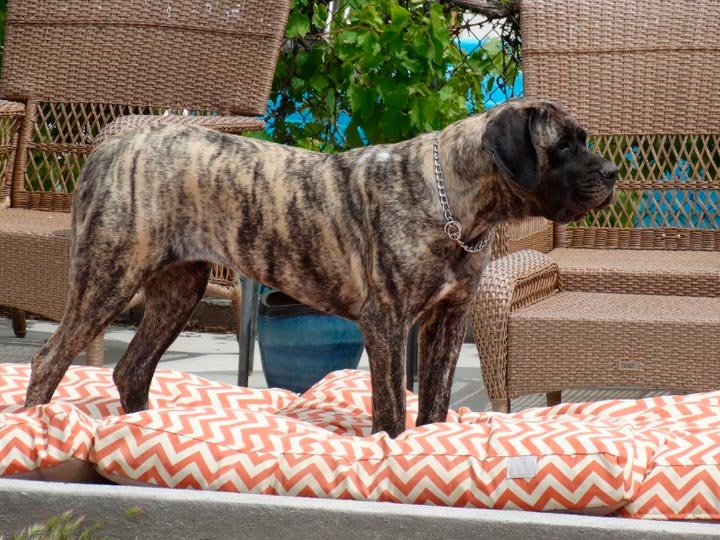
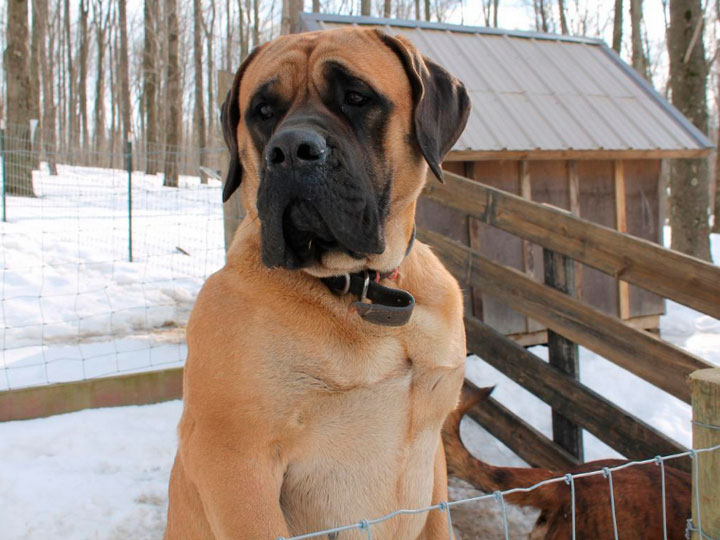
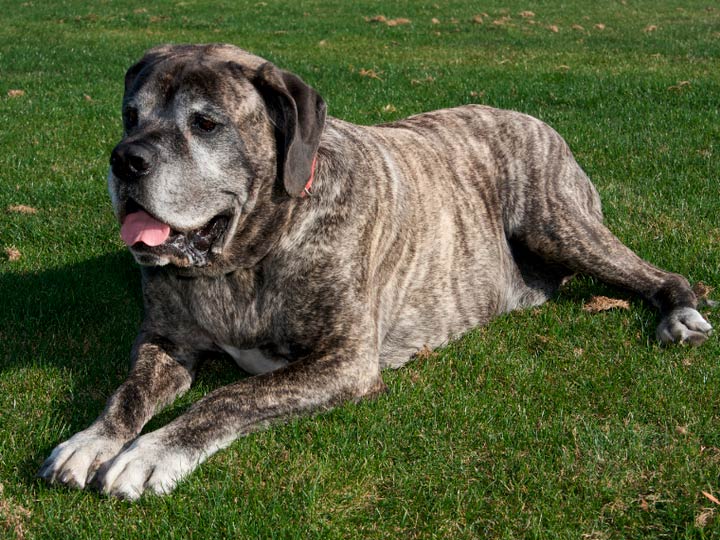
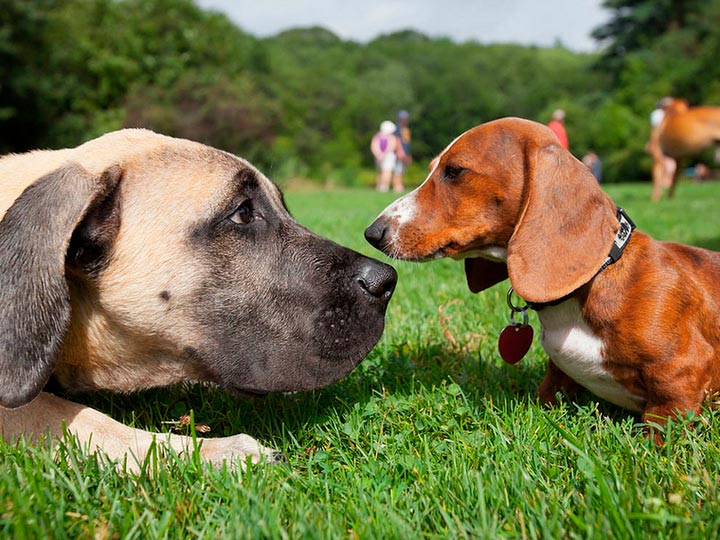
The American Mastiff is a massive, powerful, large or giant dog with drooping ears and a broad head.
- Height at the withers of males is 81-92 cm; weight is 80-90 kg.;
- The height at the withers of bitches is 71-80 cm; weight is 60-80 kg.
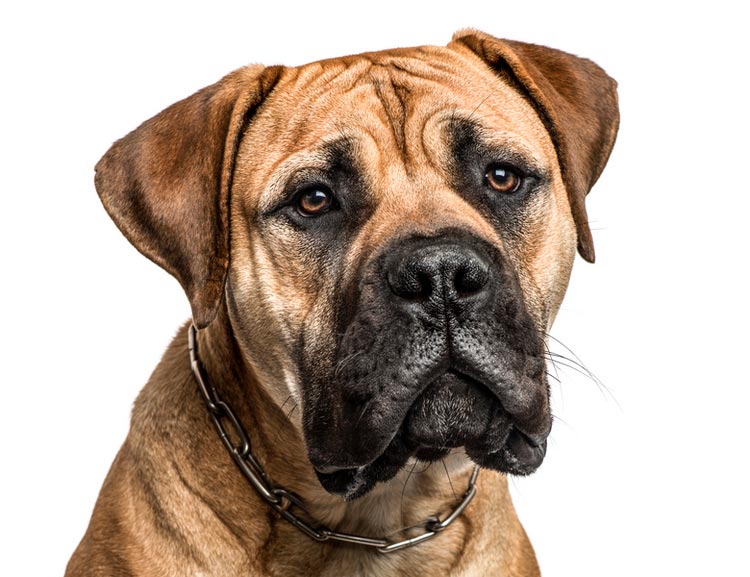
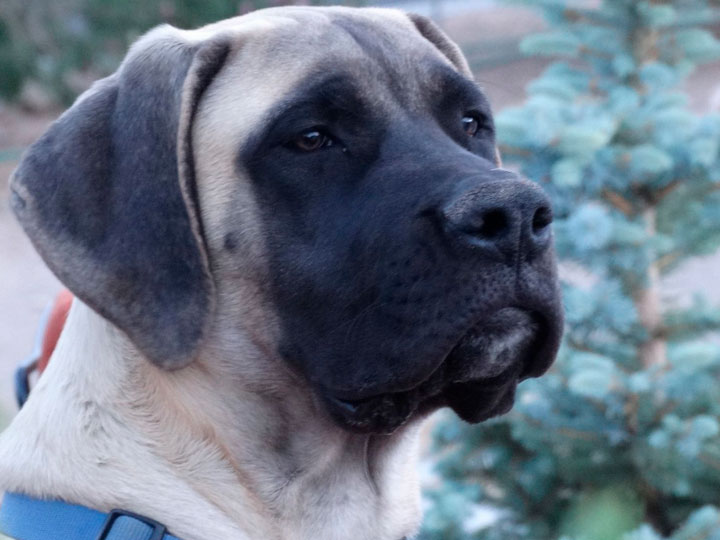
The head is large, the muzzle is moderately wide. The ears are set low, hanging, and wide. The eyes are brown or amber.
The neck is powerful and medium in length. The body is strong, powerful, and somewhat elongated. The chest is deep and broad. The back is muscular. The tail is thick at the base, tapering to a point, and hangs down or forms a slight curve when at rest. The limbs are well-boned and well-jointed, set wide apart. The paws are round, compact, and large.
In appearance, the American Mastiff is not much different from the English Mastiff, but it has a drier mouth and a friendlier character.
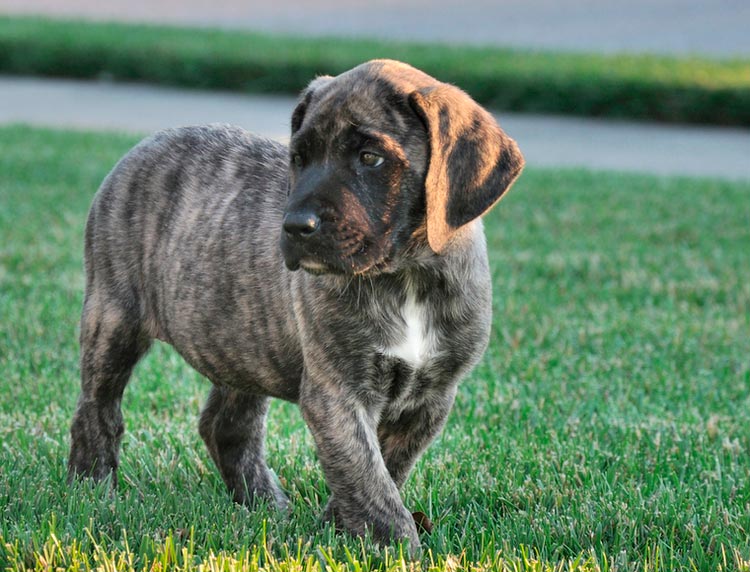
The coat is short, dense, and lies close to the body. Some puppies have longer coats, called "fluffy"; these are extremely rare and not considered a fault. Colors:
- Fawn (various shades);
- Apricot;
- Tiger.
Small white spots on the muzzle, chest, and legs are permitted. A black mask on the muzzle is required.
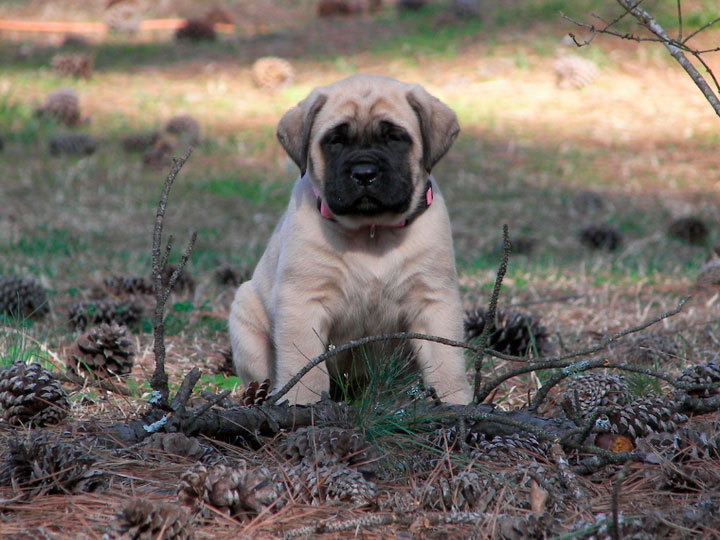
All puppies are born darker in color and become lighter as they mature.
Character and behavior
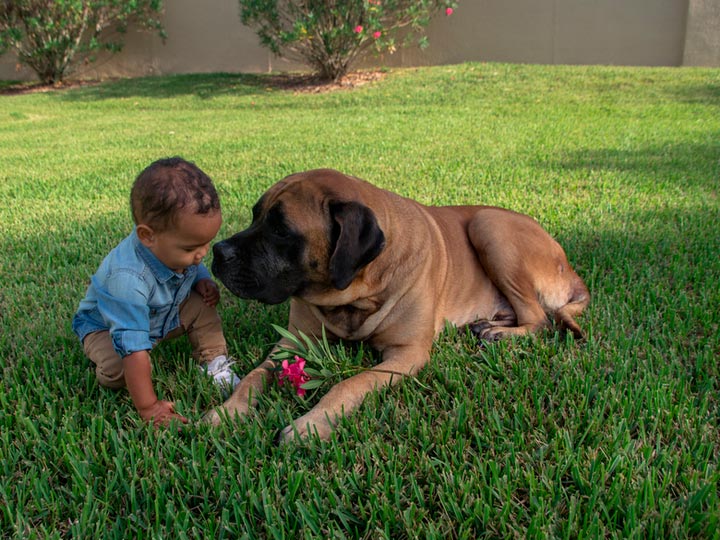
The English Mastiff has a calm, even temperament, but not as phlegmatic as many other mastiffs. He is devoted to his family and loves children, but may accidentally nudge a child or swat with his wagging tail during play. The English Mastiff is kind, gentle, and patient, always trying to be at the center of things and observe everything that's going on. He is not aggressive toward friends or guests, but if someone threatens his family or intrudes on his property, he will show all his strength and will not hesitate to give his life to protect them.
A well-trained American Mastiff is reserved, calm, and self-assured. They are understanding of everyone around them and adapt easily to various situations, displaying patience and composure. They are wary of strangers but not naturally aggressive. When faced with an increasing threat, they initially respond with reasonable warnings. They only resort to active defensive action when absolutely necessary.
Mastiffs have highly developed protective and territorial instincts. However, how they behave with strangers in their territory depends on their upbringing and training.
American Mastiff breeders insist that their dogs be considered companions and live only in homes where they will be part of the family, not as guard dogs abandoned in the backyard. American Mastiffs generally get along well with other pets if raised with them. New pets should be introduced with caution, taking into account the dog's protective instincts and size. In America, these dogs are often seen in the ranks of canine therapists.
Education and training
The most important things for an American Mastiff are good, comprehensive socialization and basic command training. While the dog won't perform circus tricks, it understands everything and can make decisions independently. A Mastiff owner should have a strong character. During training, they should be patient and consistent, generous with treats and praise. A reputable instructor and courses in General Dog Training (OKD) and Protection of the Body (ZKS) are recommended.
Content Features
The American Mastiff is best suited for a private home. It requires a large territory to guard and the ability to independently manage its exercise. Its build and temperament do not lend themselves well to infrequent, long walks. Its short coat provides poor protection in extreme cold. If left to its own devices, its owner may encounter various behavioral problems.
The American Mastiff sheds moderately, and with proper grooming, only lightly. Drooling is mild, but profuse when excited or while eating.
Care
The Mastiff doesn't require complex grooming. Grooming consists of simple hygiene procedures:
- Brushing once a week;
- Bathing once every 3-6 months;
- Cleaning ears once a week;
- Wipe eyes as needed;
- Trim claws as they grow.
Health and life expectancy
The American Mastiff can suffer from the same health problems as the English Mastiff, but they occur with much less frequency:
- Joint problems;
- Ophthalmological diseases;
- Heart failure;
- Hypothyroidism;
- Gastric bloating and torsion;
- Dermatitis;
- Allergies.
Life expectancy is 8-11 years.
Where to buy an American Mastiff puppy
Outside the United States, the breed is little known and few in number. This is largely due to its lack of recognition by the FCI and other clubs. There are no records of the breed in Russia. Those looking to purchase a puppy should consider looking for a breeder abroad.
Price
In America, the price of a puppy from a kennel usually ranges from $1,500 to $2,500.
Photos and videos
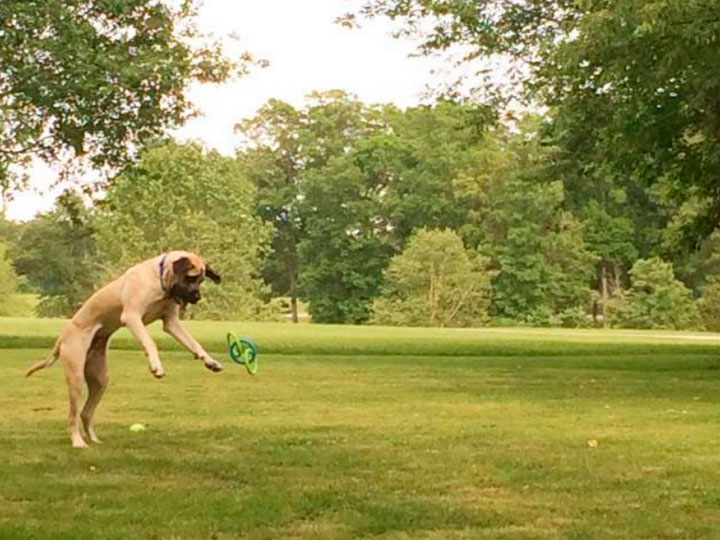
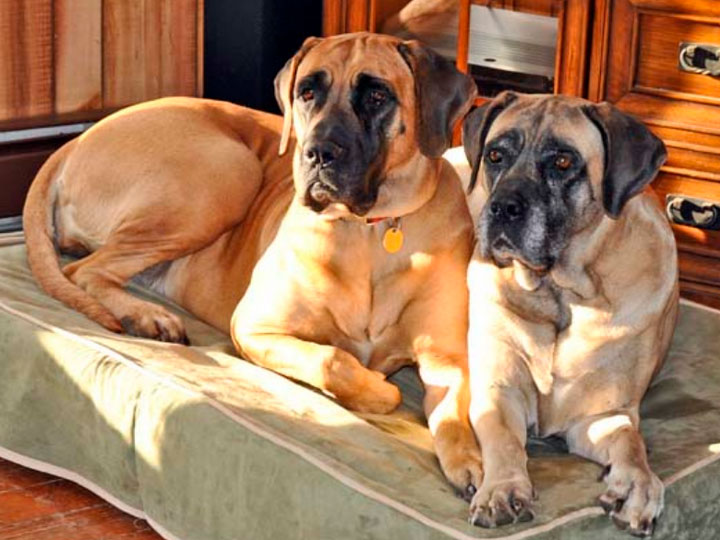
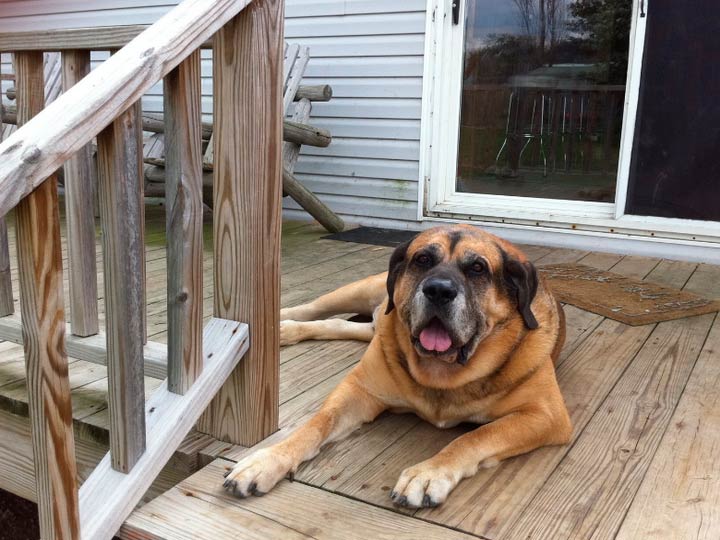
The gallery contains photographs of American Mastiff dogs.
American Mastiff on video
Training a 6-Month-Old American Mastiff Puppy
Read also:


Add a comment