
American Hairless Terrier
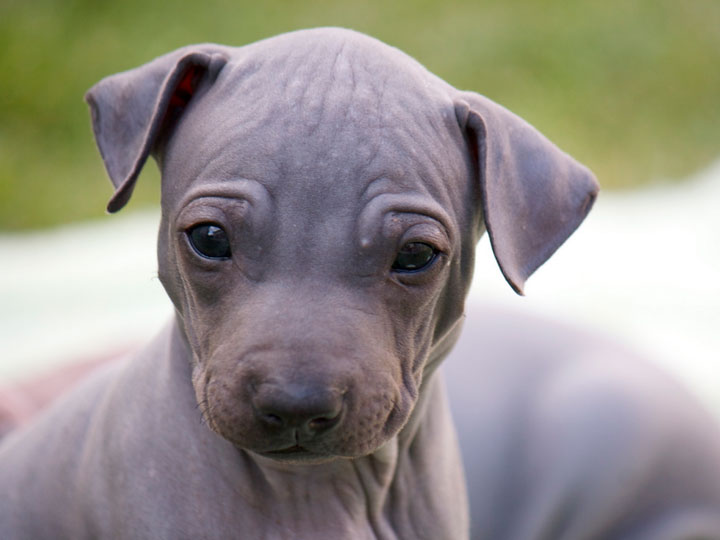
The American Hairless Terrier is a relatively new dog breed that is rapidly gaining popularity. Hairless Terriers are very outgoing, friendly, energetic, and playful, easily trained, and suitable for a variety of sports. Their skin feels like velvet to the touch.
Content
History of origin
The American Hairless Terrier (AHT) is one of the few breeds that has not only a founder but also an official birth date. The first hairless terrier, or rather, a female, was born in 1972. He was a puppy in a litter of purebred Rat Terriers. He was given to Edwin Scott from the small town of Trout, Louisiana. While hairless puppies were previously born to Rat Terrier pairs, they were considered a result of a genetic mutation, but no one paid much attention to such dogs. Edwin Scott and his family appreciated the benefits of caring for a pet without hair and became interested in the idea of breeding him. Even their lack of canine experience, much less breeding experience, was no obstacle.
Josephine, as Edwin Scott named his hairless terrier, was mated with his father and produced four puppies, one of which was hairless. Subsequent matings yielded no results, and it wasn't until 1981 that Josephine again produced four puppies, two of which were hairless. The Scott family proclaimed that day the birthday of the American Hairless Terrier breed.
Soon, Edwin Scott founded a kennel called Trout Creek Cennel and began promoting the American Hairless Terrier. Interest in the breed grew even more when it was considered hypoallergenic. In 1998, the American Hairless Terrier was recognized by the American Rare Breed Association and the National Rat Terrier Club. In January 1999, hairless dogs were added to the United Kennel Club (UKC) registry as a hairless variety of the Rat Terrier. The terrier only became a distinct breed in 2004. In 2010, the breed was recognized by the Russian Cynological Federation and is currently unrecognized, but provisionally approved, by the FCI.
Video about the American Hairless Terrier dog breed:
Appearance
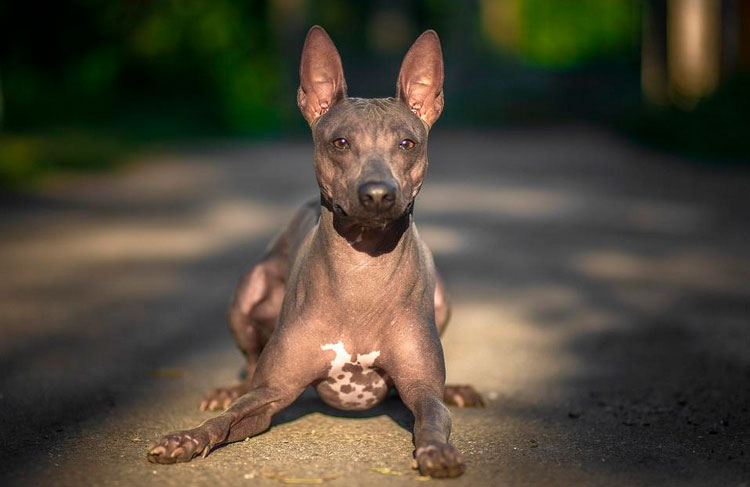
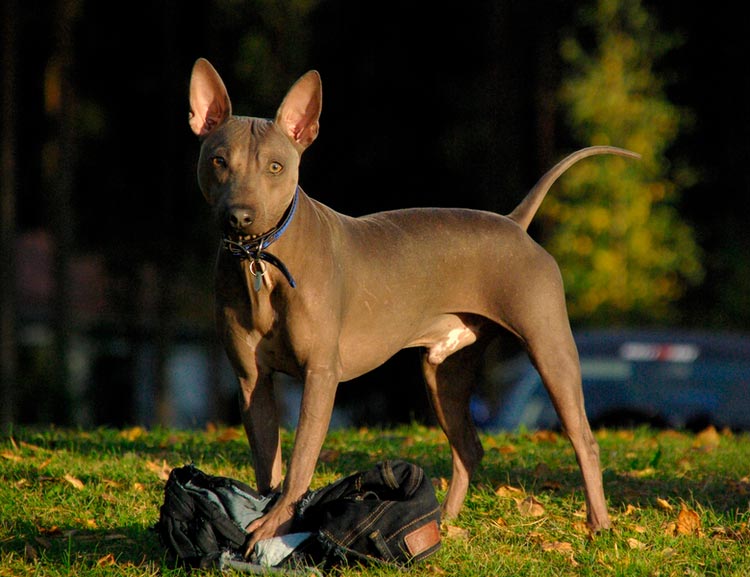
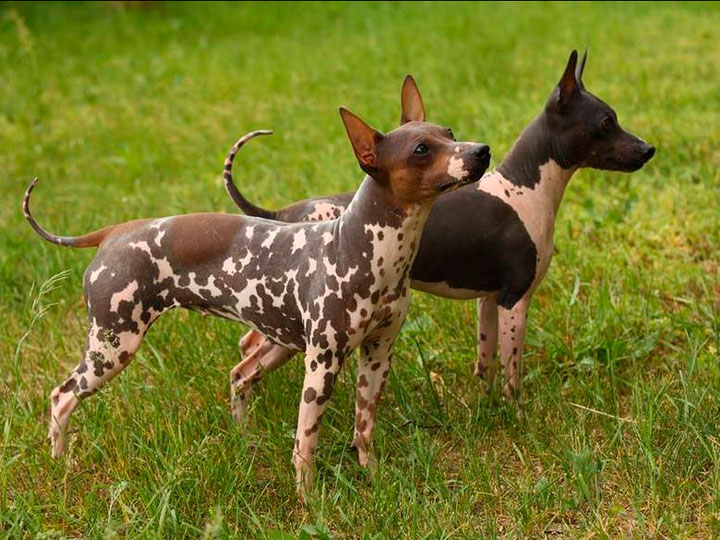
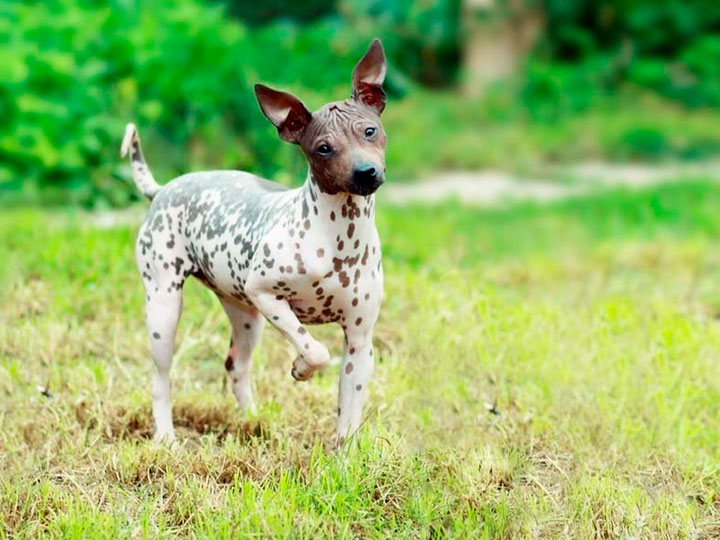
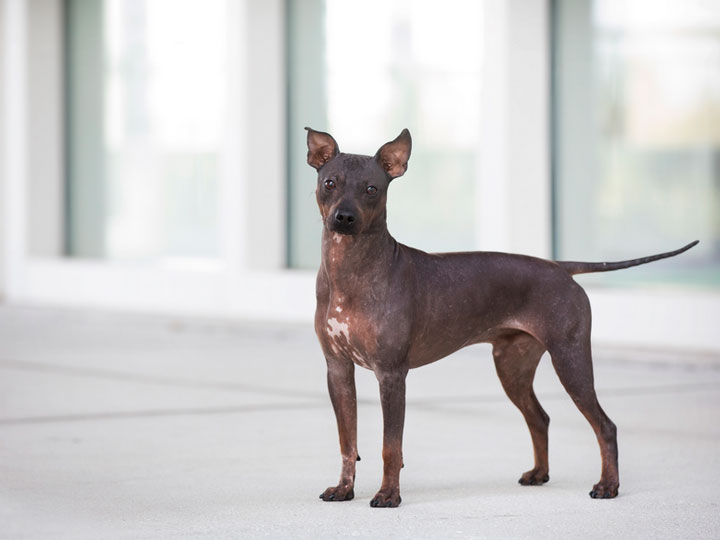
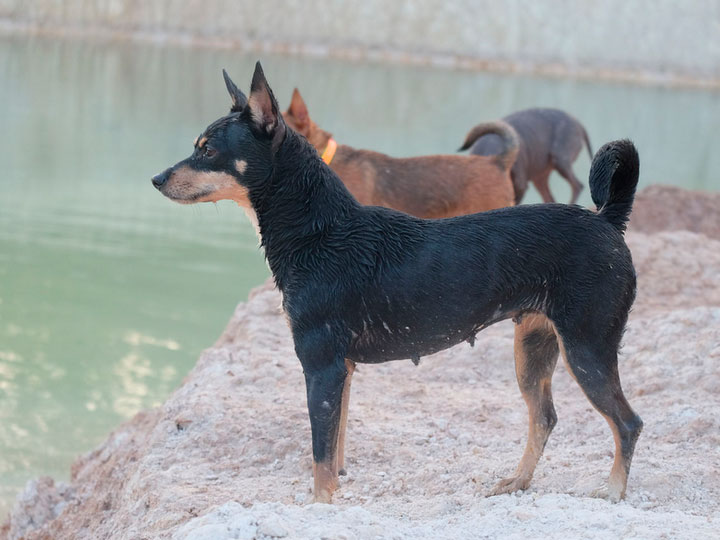
The American Hairless Terrier is a small to medium-sized dog with well-developed, but not overly defined, muscles, and is very energetic and agile. The breed comes in two varieties: hairless and coated. Sexual dimorphism is pronounced. The ideal height at the withers is 30-40 cm, and the weight is 5.5-7.5 kg.
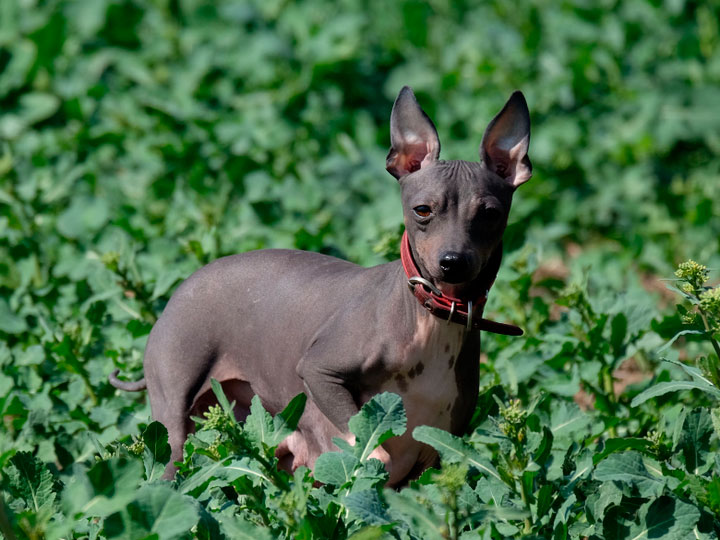
The skull and muzzle are of equal length. The stop is moderate. The muzzle tapers toward the nose, with well-filled areas under the eyes. The jaw is strong, with muscular cheeks. The lips are dry and fit tightly to the jaws. The nose is solid black or light colored, with a black rim matching the lips and eyelids. The eyes are expressive, slightly slanted, round, and medium in size. Their color should match the coat color and range from dark brown to amber-hazel. Blue eyes are permitted only in fawn or blue-colored dogs. The teeth are white and complete. A scissor bite is present, although a level bite is also acceptable. The ears are V-shaped, set at the outer edge of the skull, and carried erect.
The neck is of moderate length, slightly arched, and tapers from the shoulders to the head. The bone structure is medium, not fine, but not too coarse. The body is slightly elongated. The loin is slightly sloping, slightly arched. The croup is moderately sloping. The chest reaches to the elbows or slightly below, is moderately wide, and deep. The back is strong and level. The tail reaches the hock, tapers to a point, and is carried arched but not curled. The legs are straight, strong, and well angulated. The paws are oval and compact.
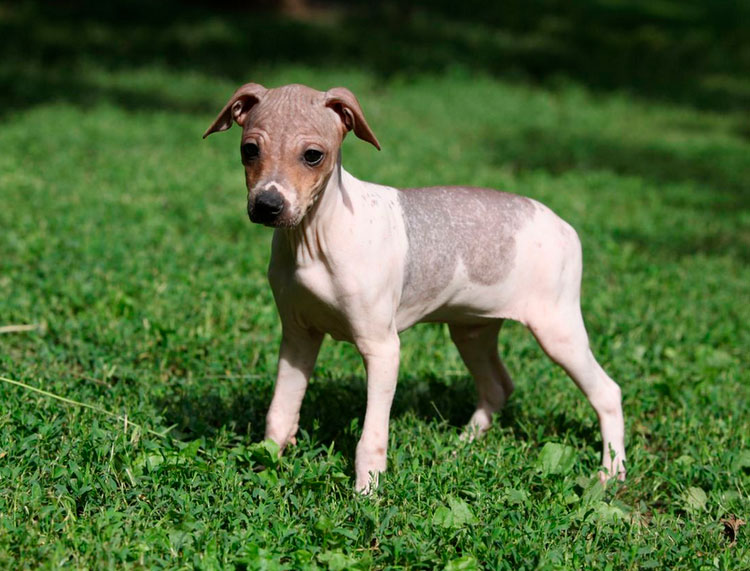
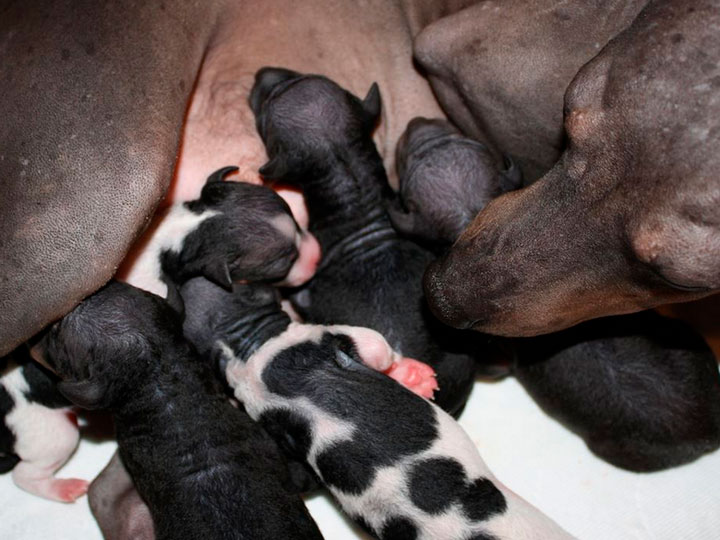
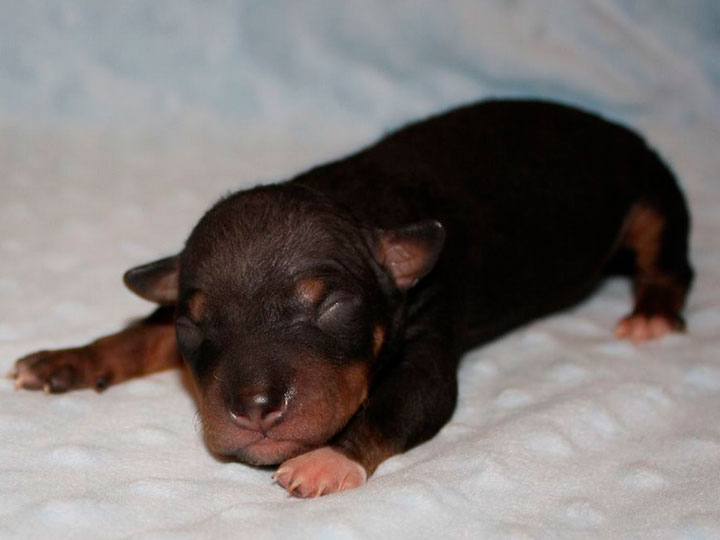
All puppies are born with fur. By 8-10 weeks of age, hairless dogs lose all their fur except for whiskers and eyelashes.
According to the type of coat, dogs are divided into two varieties:
- Naked - very short, fine hairs may be present on the body. The skin is smooth and warm to the touch;
- In wool - the wool is very short, thin, smooth, shiny.
Any color is allowed in any combination except merle and albinos. Skin color varies greatly between winter and summer when the dog is sunbathing.
Character and behavior
These hairless little dogs have a true terrier character: they are very impulsive, cheerful, playful, and energetic. Many possess a strong hunting instinct, inherited from their Rat Terrier ancestors. However, due to their vulnerability, they are unsuited for hunting. This doesn't stop these dogs from demonstrating their talents in everyday life. They enjoy hunting small animals and have a penchant for burrowing and digging.
Their alertness and territoriality make them excellent watchdogs, always alerting their owners to the arrival of guests with a loud bark. They are wary of strangers and friendly with guests. Aggression toward people is not typical for this breed. They love their owners and family members immensely, always trying to be nearby, participating in all household chores, and never missing an opportunity to snuggle up or curl up on their feet, like cats. They are well-suited for single people of any age and for families with older children, who will respect this small dog and become its friend and playmate. They are energetic and playful on walks, but with good training, they are quite obedient and tend to stay close.
American Hairless Terriers' affection extends beyond people to other animals. They get along well with dogs of all breeds, from miniature to giant, and are peaceful neighbors with cats. They are not known to harm birds or rodents, with rare exceptions. And, of course, much depends on the dog's socialization and the conditions in which he grows up.
Education and training
Don't let the hairlessness of these dogs fool you. By all accounts, these are not lap dogs, but true terriers. They are energetic, resilient, intelligent, and quick-witted. They are easy to train, but require early socialization and careful training.
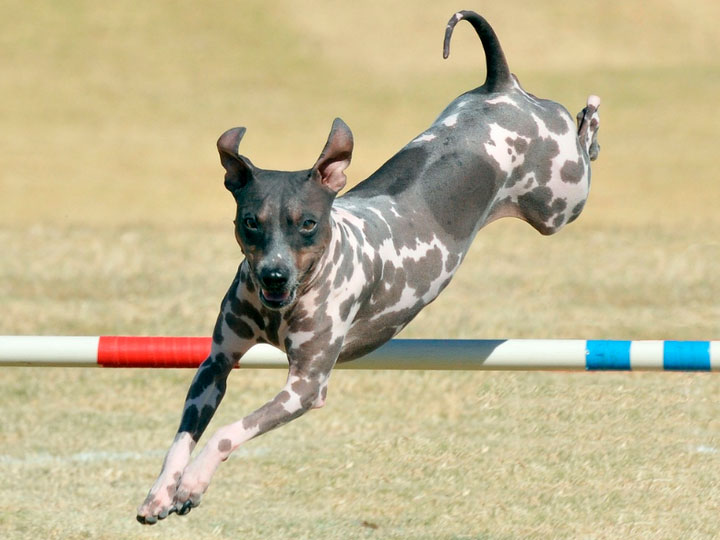
Hairless terriers are used in various sports: agility, frisbee, obedienceSometimes they can even be seen at competitions. coursing.
The American Hairless Terrier is eager to please and highly intelligent. It responds best to positive training methods. It can be stubborn at times, but quickly returns to work if its owner is calm and assertive.
Content Features
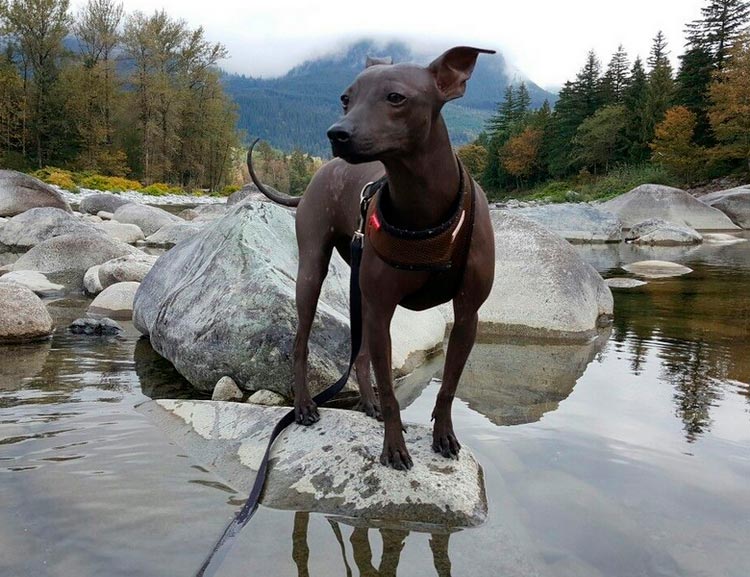
The American Hairless Terrier, like other hairless breeds, is suited exclusively to indoor or apartment life. It is absolutely not suitable for outdoor living. In kennels, dogs are sometimes kept separately in insulated rooms where the optimal temperature for dogs is maintained in summer and winter: 18-20°C.
Moderate exercise is essential. A daily walk of about 30-40 minutes is sufficient, allowing the dog to release pent-up energy. In cold weather, they often refuse walks. They are easily trained to go indoors on a pad. After walks, especially outdoors, hairless terriers often develop abrasions and scratches, which need to be treated promptly.
Question about the hypoallergenicity of the breed
The American Hairless Terrier is often the only breed that doesn't cause a reaction in people with dog allergies. However, in rare cases, allergies can be triggered by substances found on the skin or in saliva. Therefore, before getting a Hairless Terrier puppy, it's important to closely interact with adult dogs and the puppy itself.
Clothing for the American Hairless Terrier
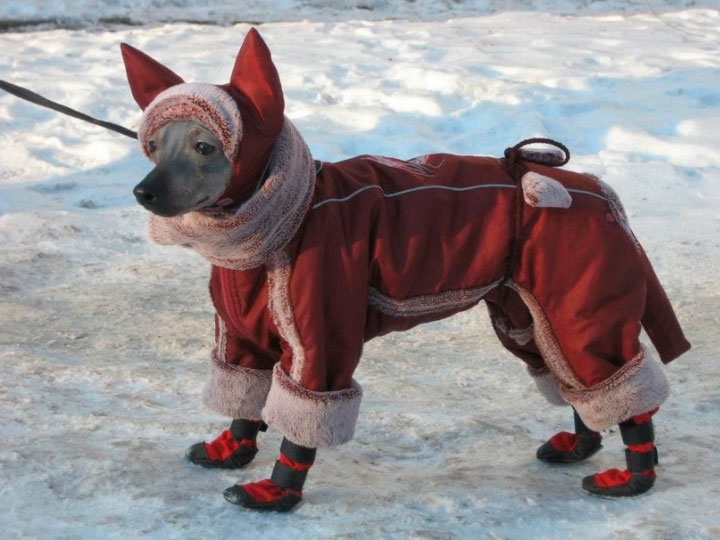
The American Hairless Terrier is a great choice for those who haven't had enough of playing with dolls. They don't tend to get cold easily and often tolerate low temperatures better than other smooth-coated breeds due to their activity level. However, to prevent hypothermia or frostbite in vulnerable areas (ears, tail, paws), it's common to dress dogs. In summer, they wear T-shirts to protect them from harsh ultraviolet rays. As cold weather approaches, clothing should be chosen according to the weather. In cold weather, they wear a hat and shoes, and sometimes sew tail guards or buy clothing for them. bare rocks, in the models of which everything is provided.
Care
Grooming an American Hairless Terrier is simple. A weekly bath and a towel-dry afterward are sufficient. In summer, their skin can become dry from UV rays and often requires additional moisturizing. Light-colored dogs are also recommended to be treated with sunscreen to minimize the risk of sunburn. Their ears should also be inspected weekly for dirt and cleaned if necessary, and their nails should be trimmed to an appropriate length every 3-4 weeks. Coated dogs should be brushed periodically with a brush or a mitt for short-haired breeds. They shed very little.
Teeth brushing is recommended; it's an effective preventative measure against tartar buildup and other dental problems. However, it's worth noting that, unlike other hairless breeds, the American Terrier's hairlessness isn't associated with missing teeth, early tooth loss, or other problems.
When puppies reach 3 months of age, their ears are fixed in an upright position for several months; they may not stand up on their own, or may not stand up completely or correctly.
Nutrition
In general, the American Hairless Terrier's diet is no different from that of any other dog of similar size and activity level. Owners and breeders recommend feeding them super-premium or holistic commercial dry food. This makes it easier for owners to provide their pet with a complete diet that doesn't require additional vitamin and mineral supplements. If desired, you can feed the American Hairless Terrier homemade food. In this case, the diet follows standard guidelines.
American Hairless Terriers are prone to weight gain and often suffer from allergies. Therefore, careful consideration should be given to food or pet food choices, as well as the caloric intake of their daily ration.
Health and life expectancy
The gene that is responsible for the absence of hair in the AGT is recessive, unlike the dominant gene found in other hairless breeds (Mexican And Peruvian naked dog, Chinese Crested), it is not associated with lethal defects, incomplete dental formula, or other genetic diseases and defects. This significantly improves the health and endurance of these small hairless dogs. However, unfortunately, it cannot be said that the breed is completely healthy. Hereditary diseases are currently being recorded, which occur with varying frequencies in different lines:
- Deafness;
- Epilepsy;
- Hip dysplasia;
- Patellar dislocation;
- Aseptic necrosis of the femoral head;
- Cleft palate;
- Diabetes;
- Epilepsy;
- Hemolytic anemia;
- Clubfoot;
- Follicular dysplasia;
- Von Willebrand disease;
- Heart defects;
- Cushing's disease;
- Liver shunt;
- Thyroid problems;
- Hemophilia;
- Predisposition to demodicosis.
All of these diseases are hereditary and even if they were registered in the breed once, the American Breed Club lists them as potentially dangerous. Life expectancy is usually 13-15 years.
A complete medical examination is recommended annually. It's also important to maintain a vaccination schedule. Regularly treat your dog for external and internal parasites. Hairless Terriers are not susceptible to fleas or lice, but they are a popular target for ticks and mosquitoes, which carry dangerous diseases such as piroplasmosis and heartworm disease.
Choosing an American Hairless Terrier Puppy
The American Hairless Terrier is a very rare breed, but not so rare that there's no kennel available in the country. Before purchasing a puppy, potential owners should thoroughly research the breed standard, speak with representatives in person, attend several major dog shows, and then begin searching for a kennel or breeder. American Hairless Terrier puppies often need to be reserved in advance. The only proof of a dog's pedigree is a pedigree. Puppies must have a tattoo, puppy card, and veterinary passport with vaccination records appropriate to their age at the time of sale.
It's crucial to evaluate the parents' personality and the puppies' appearance. They should meet the standard, be active, cheerful, and healthy, without any crusts, streaks, or redness. Minor scratches are possible, as these are common throughout a dog's life without a coat.
Price
The price of an American Hairless Terrier puppy not for breeding typically ranges from 60,000 to 80,000 rubles. Promising puppies start at 80,000 rubles. The price is influenced by many factors: the breeder's location, the quality and achievements of the parents, gender, and, of course, the coat. The hairless variety is usually considerably more expensive than the coated variety.
Photos
This gallery contains photos of American Hairless Terrier (AHT) puppies and adult dogs. You can also see photos of this breed in full fur.
Read also:


Add a comment