
Alaskan Husky
The Alaskan Husky is a very intelligent but stubborn dog. It's highly trainable. While relatively easy to learn, it always has its own opinion and may not obey commands if it doesn't deem them necessary. Training these dogs requires a great deal of patience, moderate persistence, and, of course, understanding. This breed is native to North America.
Content
History of the Husky breed
One day, a fur trader brought several small, light-colored dogs from Siberia to Alaska. For a long time, they were called "Chukchi dogs." He was confident that, well-built and fast, they would become excellent hunters. riding And he was right. Adapting to the new conditions, these dogs fully met all the requirements placed on them.
An interesting fact: Alaskan huskies can reach great speeds, even in snow-covered areas.
Some historians believe that these dogs were used as sled dogs as early as the 15th century, and that their ancestors were the wolf, the husky, and the Irish setter—an interesting combination. If someone says there's no such breed, they'll be right. To this day, the Sled Dog Federation and the American Kennel Club don't classify the Alaskan Husky as a separate breed. It's an unrecognized mixed breed. Incidentally, it's the most expensive of all mixed-breed dogs. In international racing, the term "Alaskan Husky" is commonly used to describe any non-northern breed or one not registered with the FCI.
Appearance features
The Alaskan Husky's origins were influenced by a variety of breeds. These unique dogs were created not only by the wolf, Irish Setter, and Laika, as mentioned above, but also by the German Shepherd, Border Collie, and several other breeds. Originally bred specifically for racing, its appearance was overlooked. Its development was primarily based on the simple farm dog used for sled pulling in Alaska and Canada.
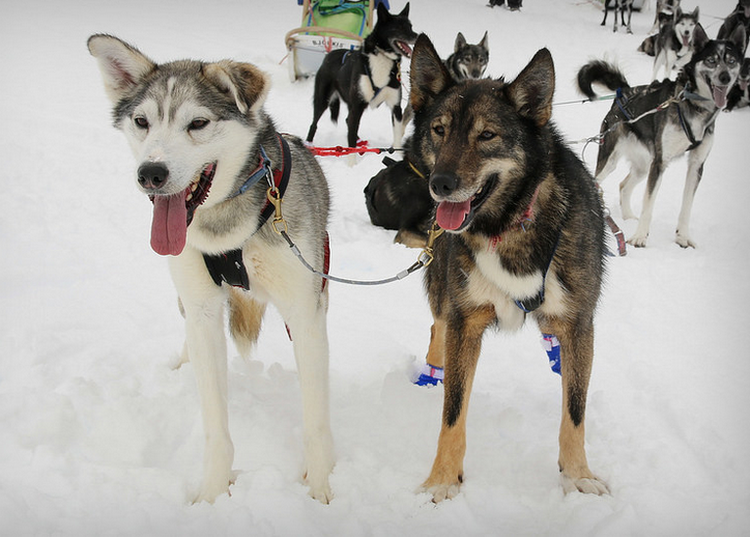
Male huskies weigh an average of 21-25 kg, while females are slightly smaller, weighing approximately 17-19 kg. Their height at the withers can range from 58 to 66 cm. Their coats can be a single color—brown, red, gray, white, or black—or they can be variegated in a variety of shades. Huskies' coats are coarse and harsh to the touch, which is striking in contrast to their soft, dense undercoat. These dogs are known for their robust health and well-developed muscles. Their slender body with a broad chest impresses with its flexibility. Alaskan huskies' eyes are typically brown, which distinguishes them from other dogs. Siberian Husky, which has blue eyes. Furthermore, Alaskan dogs, compared to Siberian huskies, are larger and more powerful.
Psychological portrait
Alaskan Huskies never cease to amaze. They are incredibly resilient, fast, energetic, and good-natured. They are sociable and active. They don't tolerate loneliness and are prone to wandering, perhaps in an attempt to satisfy their need for companionship. They require constant attention. Living with other animals is usually not a problem, especially if they were raised together. Alaskan Huskies are very friendly, which is often a problem for cats. They are also attentive to children.
Huskies are so affectionate with people that they are incapable of harming strangers, even to protect their owner. Any attempt to turn a dog into a "guard" is doomed to failure, as these animals strive to befriend absolutely all living creatures.
A husky will only attack a person out of sheer affection. These dogs are proud and independent, and taming them requires a certain amount of mental agility. Alaskan huskies can often be stubborn and difficult to persuade to obey commands, so owners must be firm and stern in their pursuit. When training a husky, it's essential to keep it occupied, otherwise it will become mischievous.
Huskies are very sociable and vocal. This trait makes them unsuitable neighbors. The only solution is proper training. As we've already mentioned, these dogs don't thrive on being alone. If you can't keep them company all day, it's best to have two dogs. A bored husky will howl and, unable to find solace, become destructive. That's how sweet, sociable, and energetic they are.
Alaskan Husky: Price and Where to Buy
In Russia, there aren't many enthusiasts for the breed, which can't be said for dog lovers abroad. After monitoring American classifieds, I found that prices for Alaskan Huskies start at $175. The average price was $500, with a certain Bruno emerging as the price leader. Bruno, an Alaskan Husky, will set you back $1,500.
These are the kinds of price research and purchasing opportunities.
By the way, if you're interested in the Alaskan Husky breed, you can purchase a dog using any international classifieds. Many breeders offer shipping, so all you need is a basic knowledge of English and the intricacies of buying and selling Alaskan Husky puppies abroad and shipping them.
Maintenance and care
Keeping a husky requires plenty of space. This breed is definitely not an "apartment" breed. But if you really want to keep it on the ninth floor, you'll need to provide it with the necessary exercise. For those who enjoy bike rides or daily jogs, they're a perfect companion. Like other huskies, they require plenty of space. These dogs are little fountains of energy, infusing everyone around them with positivity. They're ready to play, run, and frolic all day long. As you can imagine, keeping a dog with this personality in an apartment is quite challenging.
A restless husky, after just a year of confined apartment living, will turn everything upside down. Everything, including furniture, will be chewed or broken. To curb this dog's frantic temperament, it needs to be walked for four hours daily, using a leash, otherwise it will escape. You can prevent accidental escapes or aggressive attacks by training your husky to obey the "come" command.
Be prepared for the possibility that an Alaskan Husky might chase a cat and, if caught, strangle it. If a dog chases a cat crossing the road, it will be impossible to stop it.
If you don't have a lot of free time and can't provide her with brisk walks, it's better to admire the breed in the picture. Even in a private home, she'll choose the outdoors over the cozy sofa.
Alaskan huskies have a very thick undercoat, which has often saved them in the harsh northern climate. Therefore, a cool climate is more suitable for them than a warm one, and especially a hot one. In the summer, you should provide your husky with a cool place to rest.
The ideal environment for huskies is a country house with a large yard and, of course, a high fence. The enclosure fence should be well-inserted into the ground to prevent these cunning dogs from digging a tunnel and escaping, easily jumping over the fence.
Alaskan Huskies require regular grooming, including thorough brushing twice a week with a stiff brush. During shedding season, twice a year, daily brushing is recommended. Bathing is not necessary. However, if you prefer this procedure, do it as infrequently as possible, as it removes the protective oils from their skin.
Husky diseases
Representatives of this breed are prone to the following diseases:
- Dogs can inherit cryptorchidism, a genetic condition in which one or both testicles fail to descend into the scrotum. If you need a dog for breeding, choose an older puppy: by 4-5 months of age, the testicles of a healthy pet descend into the scrotum. Otherwise, you'll need to undergo an examination. If a testicle is found in the abdominal cavity, surgery can correct the condition.
- Macular degeneration is a disease that causes vision loss in huskies. The condition is caused by a limited intake of polyunsaturated fatty acids, which are found only in vitamin supplements.
- Juvenile cataracts are a genetically inherited condition in huskies caused by close inbreeding. Its symptoms (clouding of the lens, a milky color) can be noticed in puppies at an early age. Cataracts are treated with surgery: an implant—an artificial lens—is inserted into the dog's eye.
- Unfortunately, huskies often suffer cervical spine injuries due to the thoughtless actions of their owners, who decide to take the sled dog for a ride while pulling a children's sled. Grabbing the leash attached to the dog's collar, the owner gives the command "forward," and the animal bolts. The excessive strain on the cervical spine can lead to the development of a herniated disc.
- Myositis often occurs in cold-weathered dogs running outside in cold weather. Owners often forget or don't know that their huskies need to be rubbed with hay before such a walk. After exercising outside, the pet needs to cool down slowly and then warm up in a warm room.
- Huskies' gastritis is caused by their voracious appetite, which can lead them to swallow any food they find tasty, including non-food scraps. This lack of restraint and indiscriminate eating habits can lead to gastrointestinal problems.
Alaskan Huskies are true gourmets when it comes to food, but are not at all picky about water.
Alaskan Malamute and Husky
In northern dogs such as the Alaskan Malamute and the husky have many differences:
- dimensions;
- exterior;
- character;
- purpose.
There are certain similarities between the Malamute and the Alaskan Husky, but they are completely different dog breeds.
According to the breed standard, the Malamute is not suitable for sled racing; it was not developed for speed competitions. This dog was bred for strength and endurance, and any traits in any individual that interfere with this goal are considered serious faults. Historical and modern literature clearly outlines the physical and functional differences between the Husky and the Alaskan Malamute. This is clearly reflected in the modern Alaskan Husky breed standard.
External differences
The Alaskan Husky is a smaller dog and weighs less. It is an agile, easy-going dog. The breed is characterized by a stocky build and a very dense coat. The coat feels soft, but not fluffy. The Alaskan Husky's paws are strong and lightweight. The tail is curled or carried high; unlike the Malamute, the Alaskan Husky can come in a variety of colors.
The Husky is not a selectively bred dog. Its development was shaped by harsh natural conditions and unfavorable climatic conditions. It is a living example of how only nature can produce the perfect product of selective breeding.
The Malamute is a developed breed, and although the dog is considered ancient, the development of its character traits and selective breeding are relatively recent. This animal successfully combines the domestic dog and the white wolf. This accounts for its larger size, massive paws and skeleton, and clumsiness. Colors range from gray and white to black and white, with a blue tint also accepted. Eye color is also strictly limited—brown is the only acceptable color.
Alaskan Husky Miniature Husky
The Miniature Husky is essentially the same Alaskan Husky, only unusually small in size. Because of this characteristic, this miniature replica, thanks to one woman, eventually became a separate breed, called the Alaskan Klee Kai.
In general, the history of the development of the Alaskan Husky miniature husky developed as follows:
In 1970, Linda Spurlin's Alaskan Husky bitch gave birth to an unusually small puppy. She was immediately inspired by the idea of breeding a miniature Alaskan Husky that would closely resemble the full-sized original. Together with her friend Eileen Gregory, Linda set about implementing her plan. The work was not in vain: in 1995, the Alaskan Klee Kai miniature husky was recognized by the Rare Breed Association of America. Two years later, the dog was also recognized by the UKC.
Photos
Photos of Alaskan Huskies:
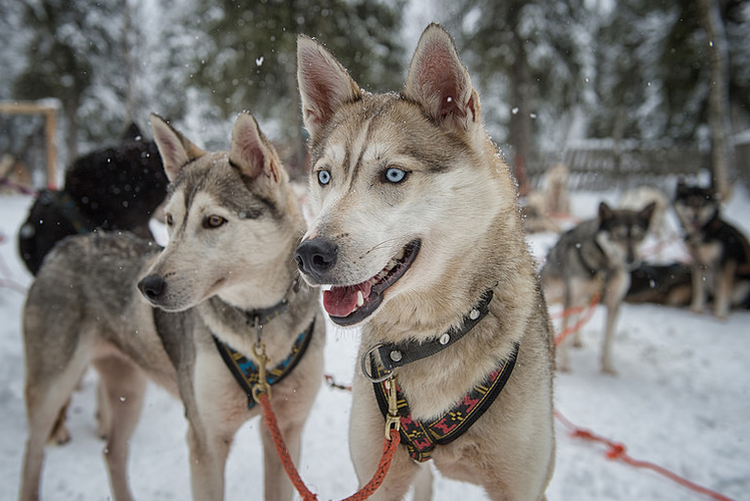
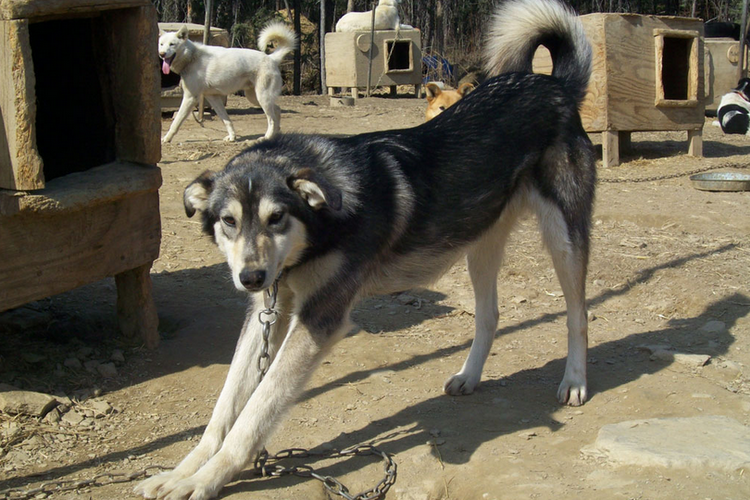
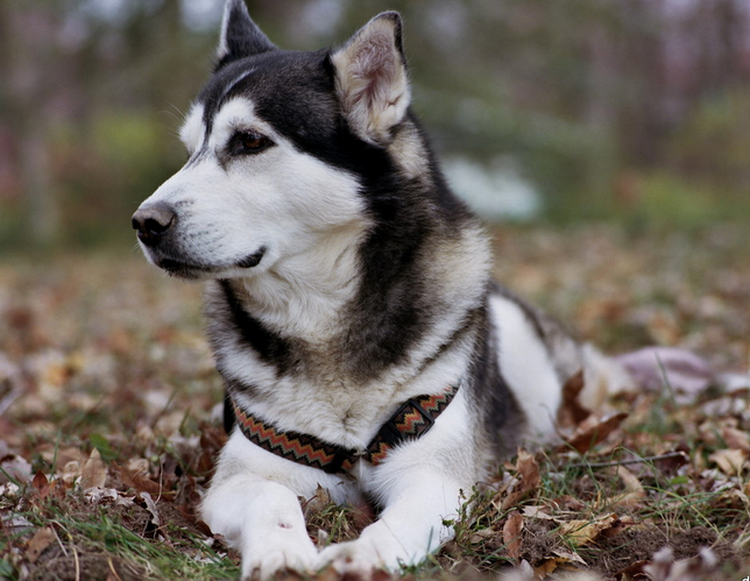
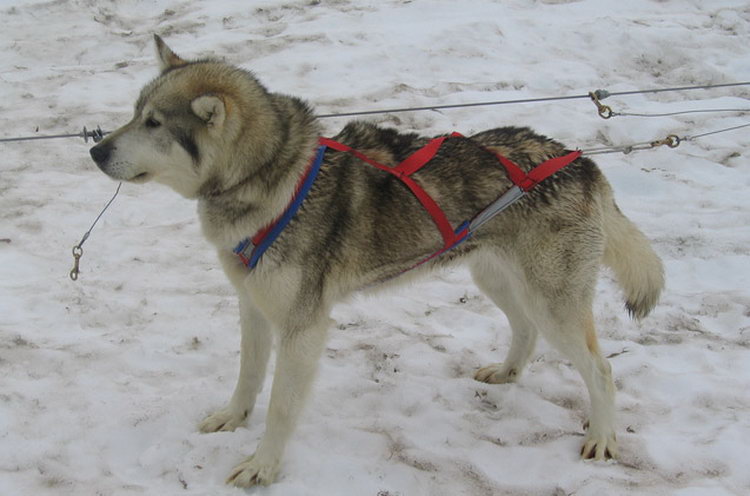
Read also:


1 comment
Igor
Have you seen Alaskan Huskies? The photo you see is of an Alaskan Malamute and a Siberian Husky. You'd be hard-pressed to tell an Alaskan Husky apart from a mongrel, as they're mixed breeds that look like they belong together. The only things that set them apart are their speed, endurance, lean build, and lighter frame.
Add a comment