
Alpine Dachsbracke (Alpine Dachsbracke)
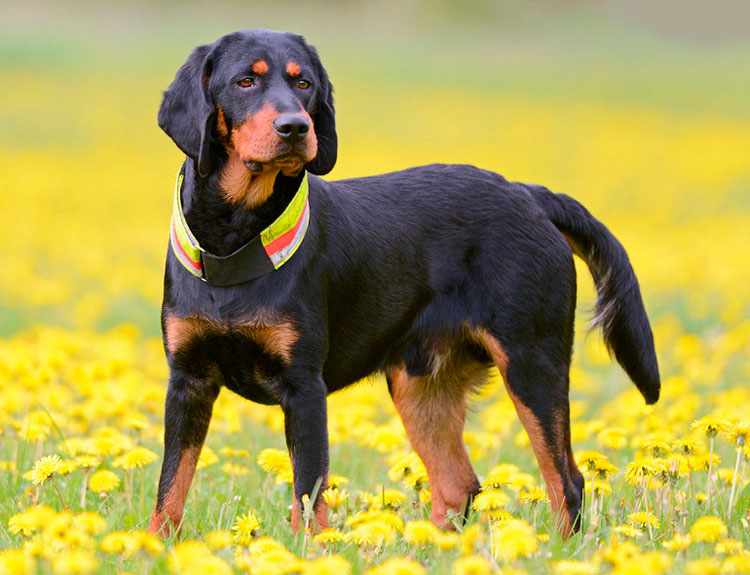
The Alpine Dachsbracke is a hunting dog breed popular in Austria and Germany. It is used to hunt small fur-bearing animals, and less commonly, wild boar. It is renowned for its assertive nature, keen sense of smell, and drive. It is courageous and independent in its work.
Content
History of origin
Similar dogs have existed and been used for hunting for a very long time in various European countries. For example, in Sweden they are popular Drever, and in Germany, the Westphalian Dachsbracke. Professional breeding of the Alpine Dachsbracke began in the late 19th century under the orders of Prince Rudolf von Habsburg. This breed was likely developed by crossing the Standard Dachshund with local Austrian scent hounds.
In 1932, the Austrian Kennel Club recognized the Alpine Dachsbracke as a third breed in addition to the Hanoverian and Bavarian The breed was originally bred under the name Alpine-Erzgebirgler Dachsbracke. In 1975, the name was changed to Alpine Dachsbracke, at which time Austria was recognized as the country of origin. The breed was recognized by the Fédération Cynologique Internationale in 1991.
Hunting with the Alpine Dachsbracke
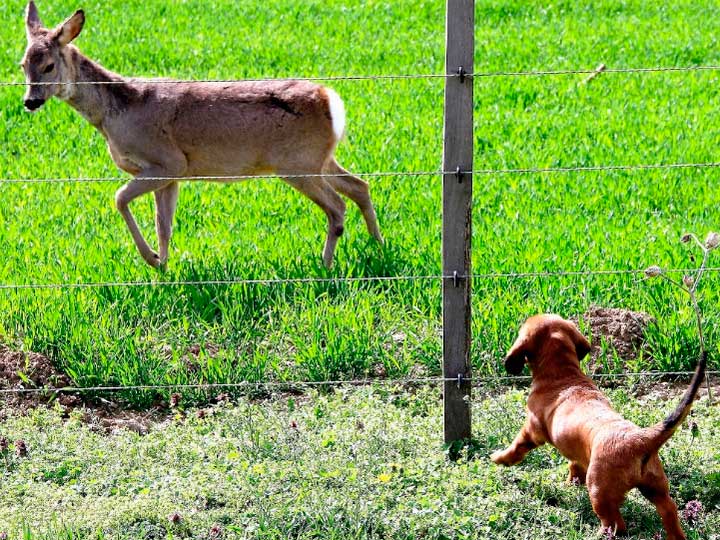
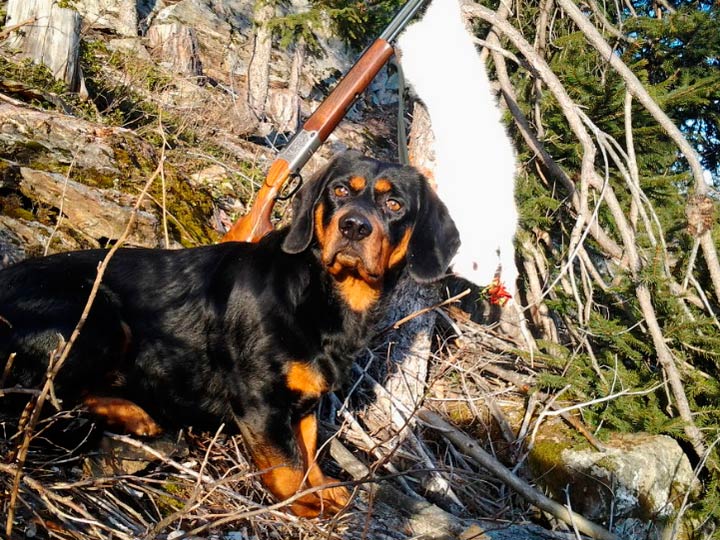
In Austria and Germany, the breed is very popular as a small, comfortable working dog, well-suited for mountainous terrain. It is primarily used for hunting hare and fox. It can also chase large ungulates and wild boar, and can locate wounded game by following a blood trail.
The Alpine Dachsbracke is a strong and hardy working dog of the mountain hunter. It is used for chasing and retrieving ungulates, hares, and foxes.
The Alpine Dachsbracke is distinguished by its dashing and fearless demeanor. It excels both alone and in a pack. If desired, it can be trained to locate and retrieve downed birds.
Appearance
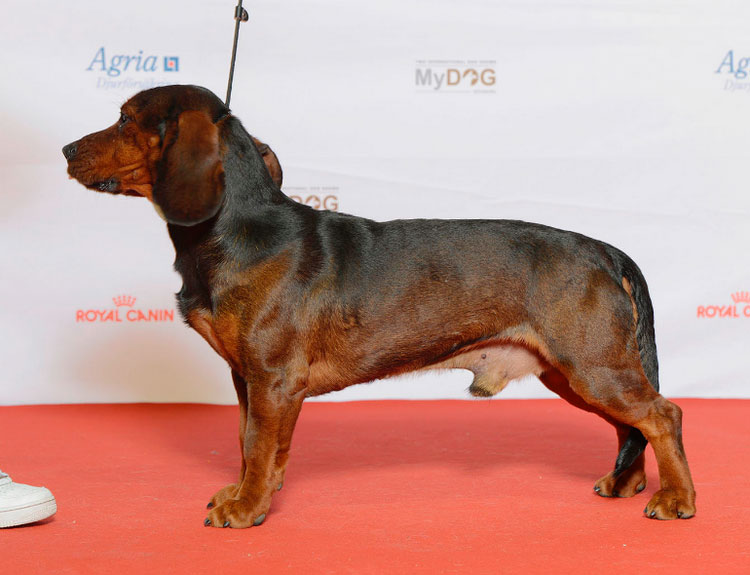
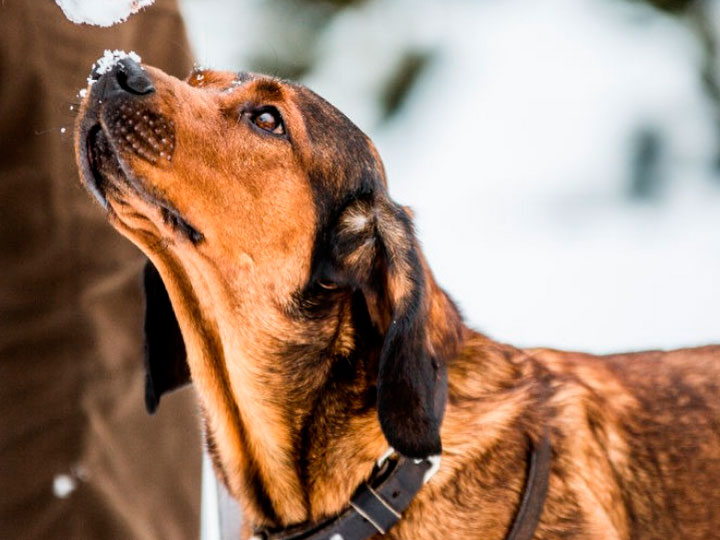
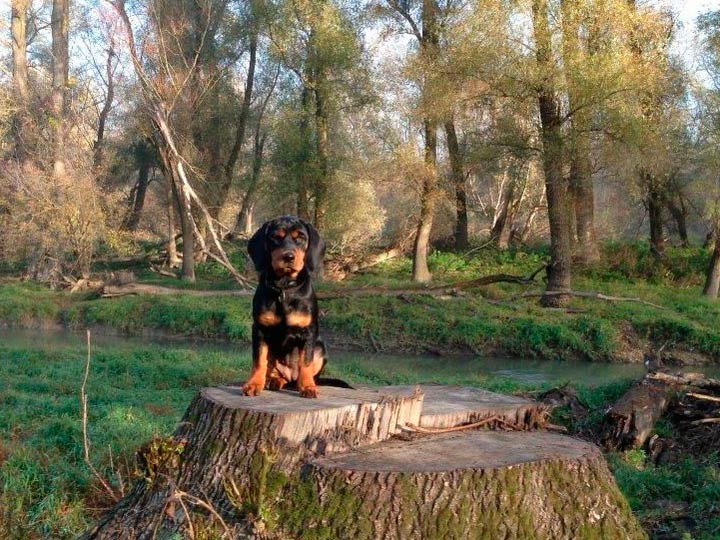
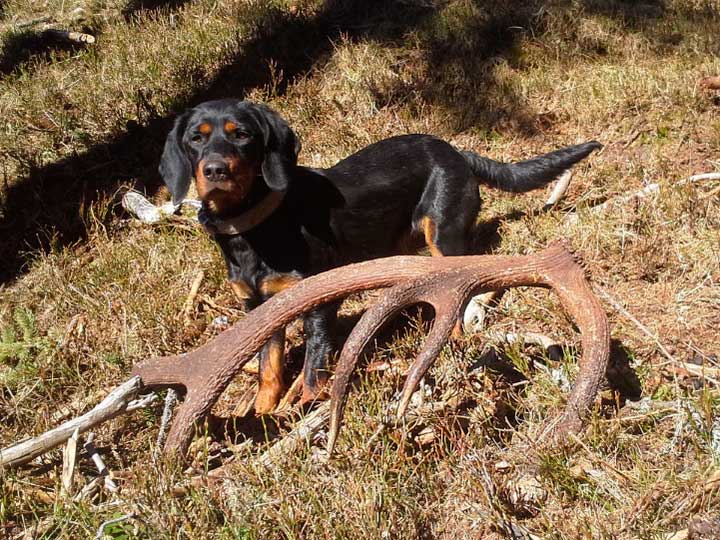
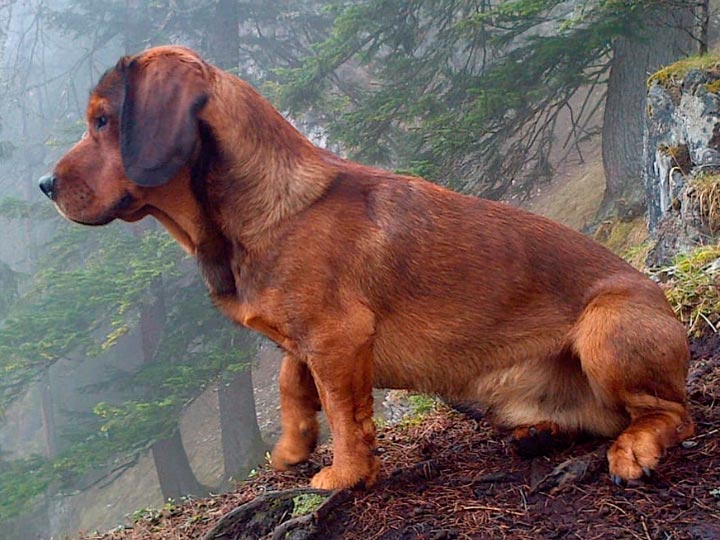
The Alpine Dachsbracke is a small, stocky, elongated dog with an elongated head, long, drooping ears, strong legs, and a thick tail. Unlike dachshunds She has an upright stance and exhibits well-defined sexual dimorphism.
- Height at withers: 34-42 cm.
- Weight: 15-18 kg.
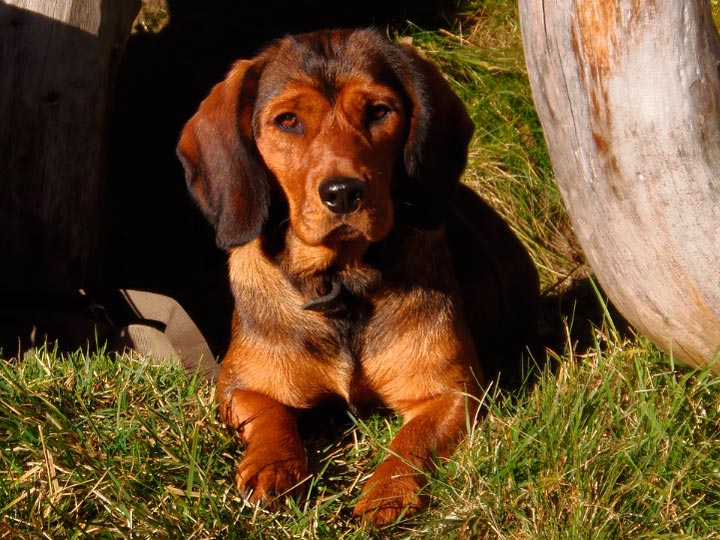
The head is proportionate to the body. The eyes are round, large, and expressive. The nose is large with wide-open nostrils. The bite is scissor-like. The muzzle is strongly elongated with a slight bald spot on the bridge of the nose. The ears are large and pendulous, with rounded tips. The neck is of medium length, with noticeable folds of skin.
The body is elongated, noticeably longer than tall. The back is straight. The croup is not pronounced. The belly is slightly tucked up and dry. The tail is saber-shaped and set high. The limbs are short, straight, and strong. The paws are large with well-knit toes.
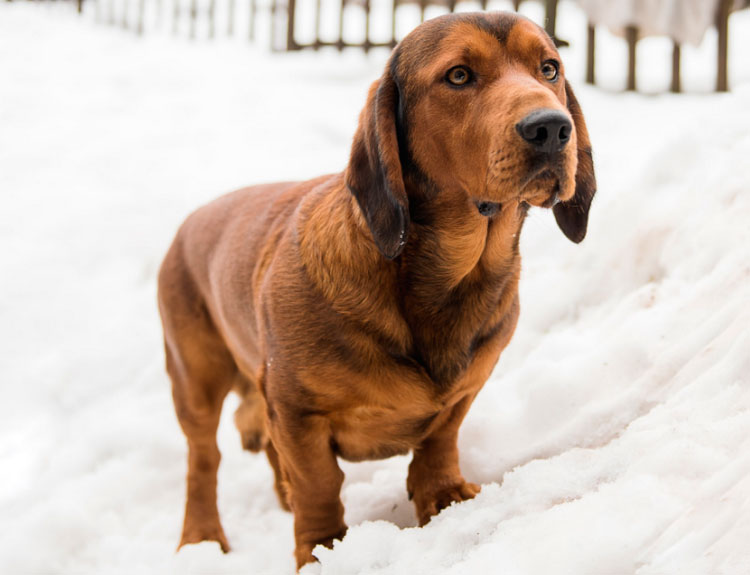
The coat is dense, very thick, and wiry. It is noticeably longer on the hind legs, neck, and tail, forming feathering. Colors:
- Chocolate tan;
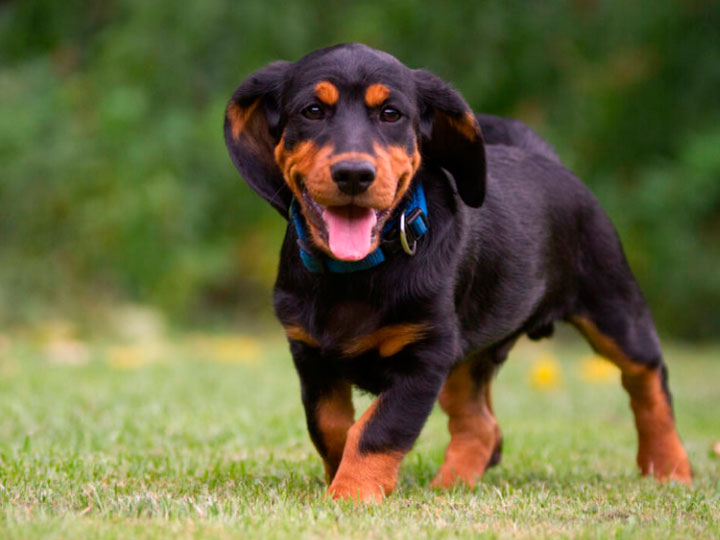
- Black and tan;
- All shades of red;
- All shades of brown.
Character and behavior
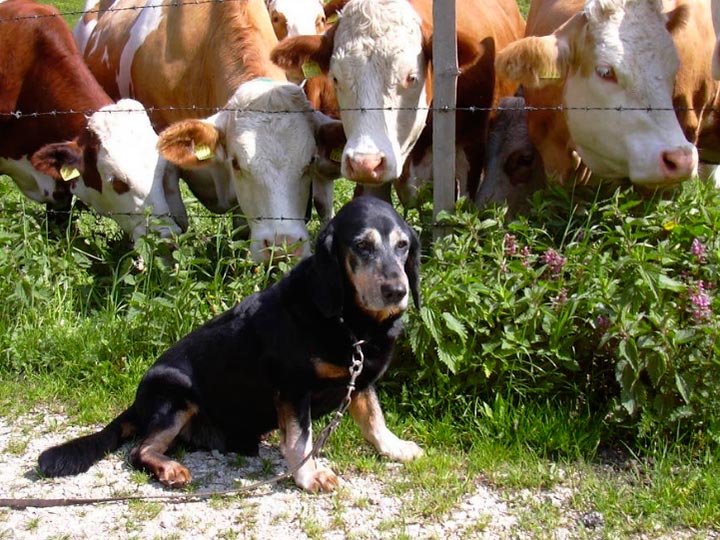
The Alpine Dachsbracke's character and temperament are as robust as its body. This bold and fearless working dog has genetically ingrained hunting instincts. It also makes a wonderful companion and watchful guard dog. Its characteristic traits include eagerness, courage, and independence. At home, the hound is relatively calm, but quickly perks up in anticipation of a walk or a trip to the hunting grounds.
The Alpine Dachsbracke displays a sincere and touching affection for all family members, yet is also quite independent. It is not prone to aggression. With proper socialization, it gets along well with other pets.
During training and education, she is responsive, but at times very stubborn. Excellent control can only be achieved if the dog is trained correctly from an early age and reinforced throughout its life.
Content Features
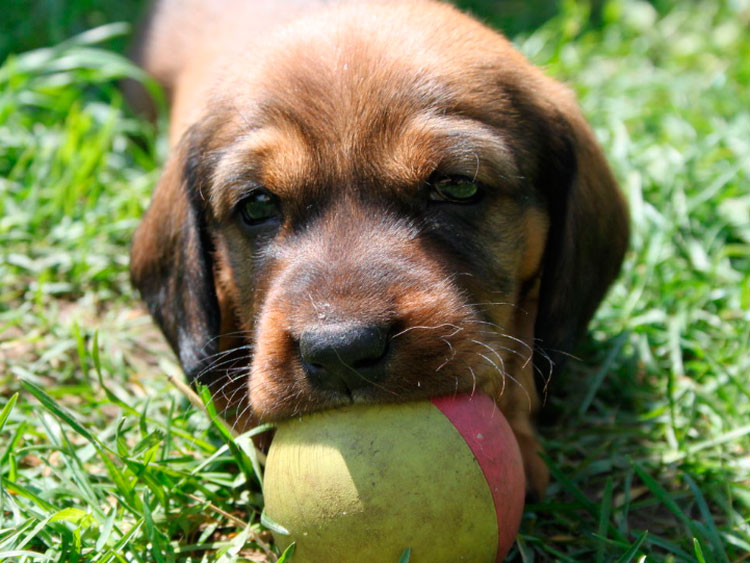
The Alpine Dachsbracke is suitable for both indoor and outdoor living. It doesn't require any special grooming. Its coat requires occasional brushing (approximately 2-3 times a month) and bathing as needed. Its ears should be regularly inspected and cleaned of accumulated dirt and wax, and kept dry. During its growing years, the puppy especially needs active play.
Health and life expectancy
The Alpine Dachsbracke is a relatively healthy breed. A predisposition to ear infections has been noted. Back problems and spinal disorders related to the elongated body shape are sometimes encountered. Until the puppy reaches adulthood, owners should limit jumping and climbing stairs, and supplement their food with mineral supplements. The expected lifespan is 10-12 years.
Choosing an Alpine Dachsbracke Puppy Price
The Alpine Dachsbracke Hound is very popular among hunters in the mountainous regions of Germany and Austria, but is little known and uncommon outside of these countries. While there are representatives of the breed in Russia, there is no information about breeders. Online, you can only find ads for puppies for sale from private owners, usually undocumented puppies or mixed-breeds. The average price for puppies from working parents is 25,000 rubles. A mixed-breed puppy usually costs no more than 1,000 rubles.
Photos and videos
You can see more photos of Alpine Dachsbracke Hounds in the gallery.
Video about the Alpine Dachsbracke Hound breed
Read also:


Add a comment