
Alopekis (Little Greek Dog)
These small Greek dogs can hardly be considered a separate breed, although they do have their own name—Alopekis. They are a group of versatile working dogs of a primitive type, similar in appearance and character. Since the early 21st century, Alopekis have been endangered. Currently, they are not recognized by any canine organization, nationally or internationally.

Content
History of origin
Depictions of dogs of this type appear in various archaeological finds. The oldest dates back to the Neolithic era and is housed in the Athens Museum. It is a terracotta vessel discovered in Thessaly, dating back to 3000 BC, bearing a schematic drawing of an alopekis.
Alopekis (Greek: Αλωπεκίς) means "little fox" in Greek, but these small dogs with fox-like faces were previously known by various names. For example, in Serres they were called "sugar dogs," most likely due to their common white coloring and gentle nature.
Until the 1970s and 1980s, Greek mongrel dogs, known as alopekis and melitheo kinidios, constituted the majority of the canine population in both urban and rural Greece. The importation of other breeds, economic difficulties in the country, the lack of breeding efforts, and the widespread sterilization of dogs of no breeding value significantly impacted their population and purity. Since the 1990s, alopekis have been on the verge of extinction. At the Zootechnia 2013 conference in Thessaloniki, Greece, only 58 purebred dogs were represented. The situation is somewhat better for the melitheo kinidio. A toy breed, the Kokoni (small Greek dog), was developed from these dogs. It is recognized by the Hellenic Kennel Club, but is still very small in number.
Purpose
Alopekis combines hunting, guarding, and herding talents. Their appearance and behavior are typical of primitive breeds. Throughout Greece, they were used to exterminate rats and other small rodents, guard poultry from foxes, and worked well with large wolfhounds, guarding livestock on farms and in pastures. In the north of the country, until recently, they were used to herd buffalo. In all regions, they are still used to herd goats, sheep, and cattle.
Appearance
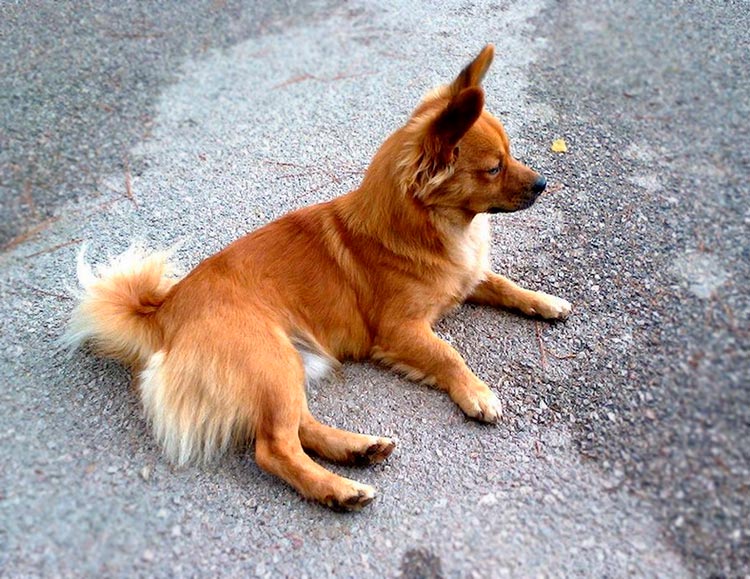
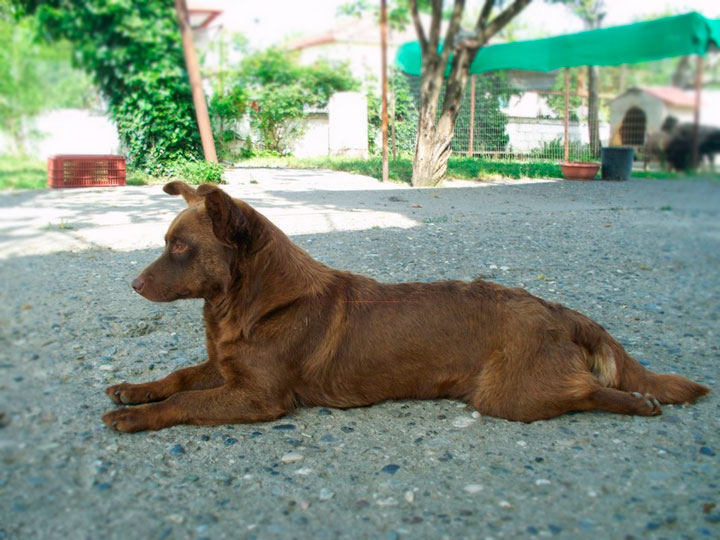
The Alopekis is a small, strong, and muscular dog of primitive type. Its body is elongated, and sexual dimorphism is very pronounced. Height at the withers ranges from 20-30 cm, and weight ranges from 3.5-7.5 kg. Its small size is likely due to island dwarfism, not selective breeding.
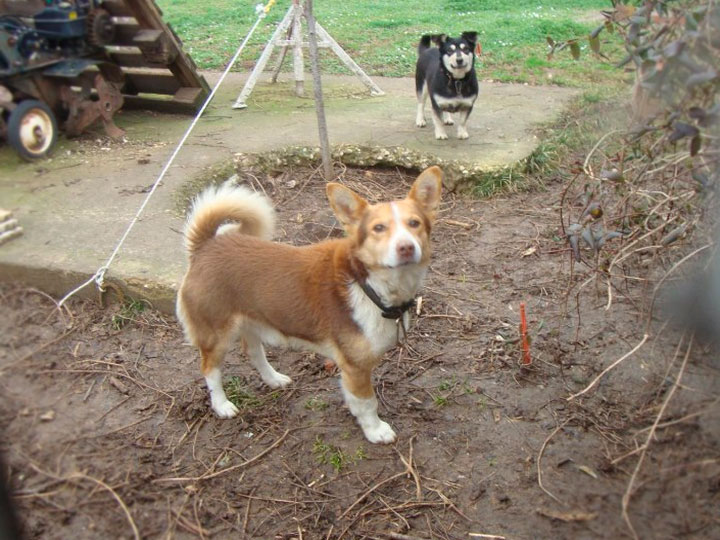
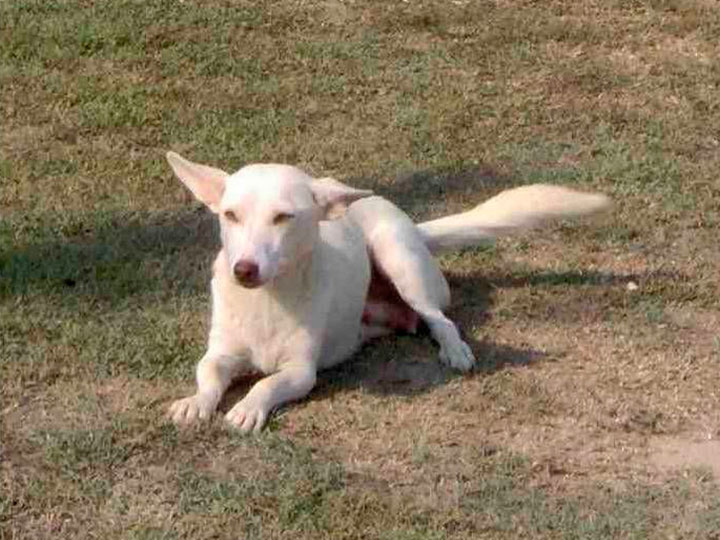
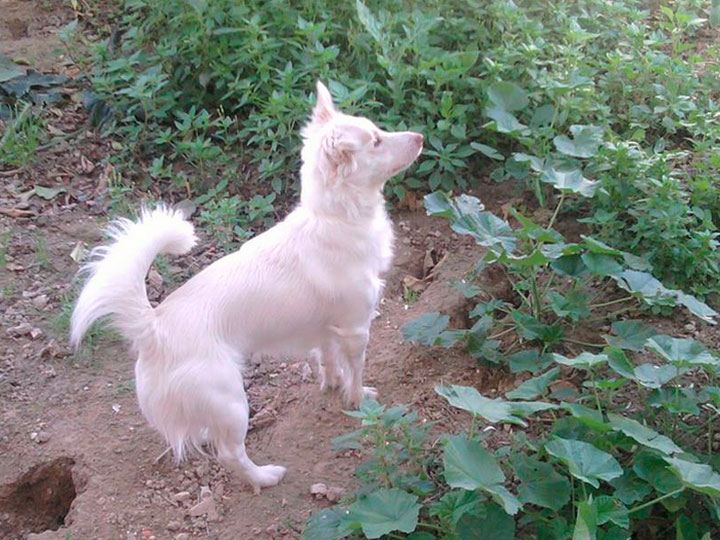
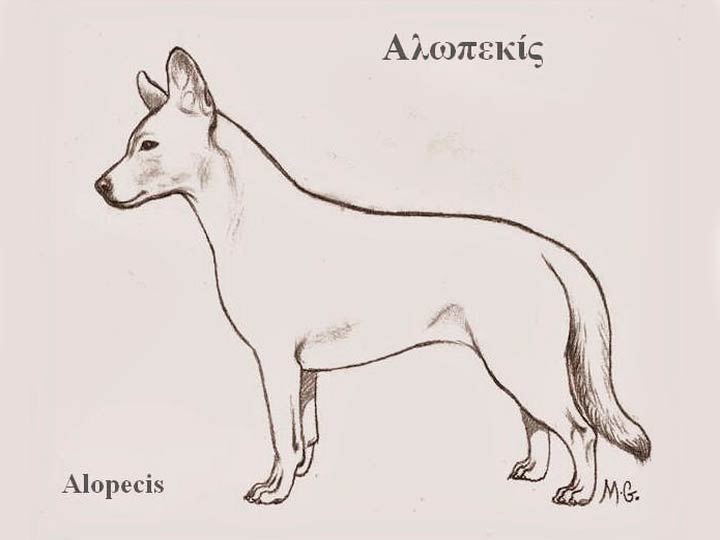
The Alopekis's head resembles a fox's. The muzzle is equal in length to the skull. The stop is shallow but distinct. The head is wedge-shaped. The skull is broad, with a prominent median groove. The jaws are strong. The lips are tightly fitting. The eyes are almond-shaped, large, with dark eyelids. The ears are relatively large, erect, triangular, and very mobile.
For its size, the Alopekis is very strong, agile and resilient.
The body is strong and proportionate. The legs are medium-sized, neither short nor long, and very strong. The paws are oval. The tail is saber-shaped, carried fairly high but not touching the back.
According to their coat, Alopecies are divided into three varieties:
- Shorthaired - the coat is short, close-fitting, dense;
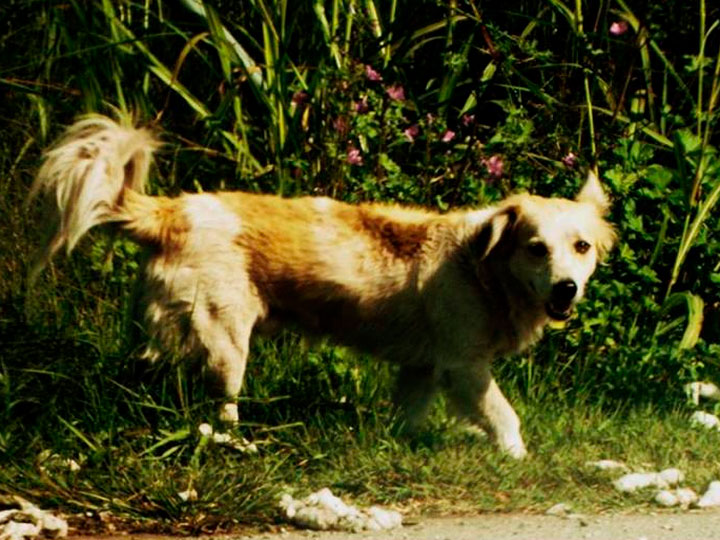
- Semi-longhaired - the coat is of medium length, coarse, thick;
- Wirehaired - the hair is semi-long, hard, and forms whiskers on the muzzle and beard, this option is extremely rare.
Regardless of the coat type, the Alopekis has a well-developed undercoat.
The preliminary breed standard only allows dogs with double, smooth coats, with the outer coat length not exceeding 5 cm.
Alopekis or coconi
Greece has a very diverse population of small dogs. The only recognized breed derived from them is the Kokoni, or Little Greek Dog. Given the breed's small population, the Greek Kennel Club issues pedigrees to dogs that meet the standard. If a dog resembles an Alopekis, it is given a name but no papers are issued, as the breed is not recognized.
Alopekis have exceptional intelligence and working qualities, are practically universal in their uses, and are strong and hardy. Kokonis are considered to be decorative dogs. They were bred primarily from urban companion dogs. Even their name, "kokoni," is derived from the word "kokoni." cocoon Meaning "daughter's dog" or "house dog" in modern Greek, the Kokoni has a silky, long coat, especially on the ears, neck, tail, and back of the legs. The hair can be straight or wavy. The ears are often semi-erect. The height at the withers is no more than 28 cm.
Character and behavior
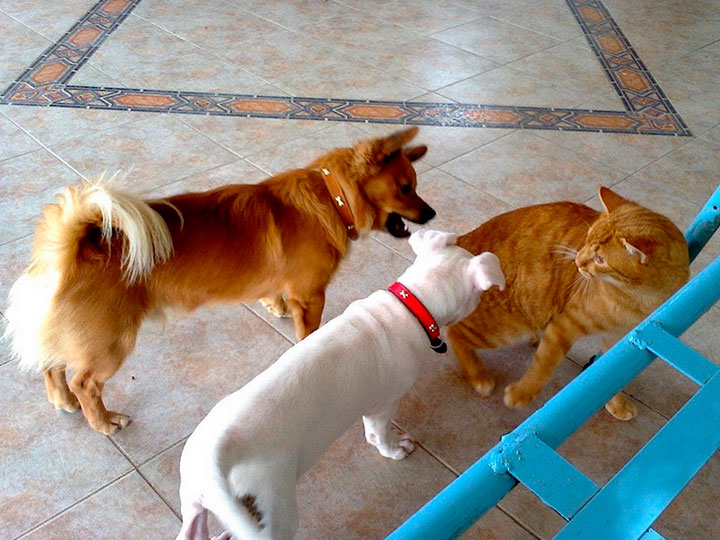
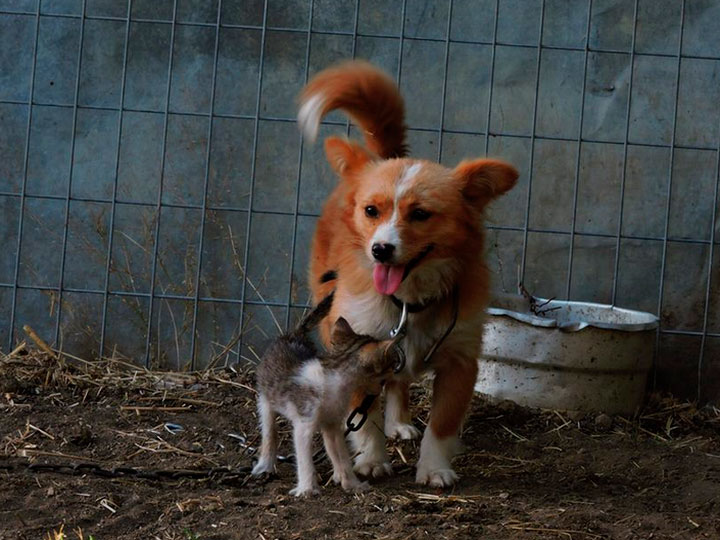
The Alopekis is reliable, energetic, cheerful, and devoted to its family. It is not aggressive or prone to excessive barking, but is confident, sociable, and has a balanced character. It is very diligent, easy to train, and has an exceptional intelligence. It is intolerant of small rodents, but is caring and protective of other pets. The Alopekis is an excellent watchdog, alert, courageous, and attentive. It is very resilient, both physically and psychologically.
Alopecis dogs don't have a very strong hunting instinct. However, they are sometimes used to locate and retrieve game.
Alopecies remain very active and playful well into old age. They get along well with children of all ages. Very young children can be knocked over during play, so interactions between the dog and the child should always be supervised.
The Alopekis is very intelligent and strives to please its owner in every way, but also takes care of its own needs. If necessary, it will resort to cunning to achieve its goals. It values freedom and constantly strives to keep itself busy. It's best if the owner knows in advance what they will be doing with the dog in the future (herding, hunting, sports) and begins working with it in this direction from puppyhood.
Content Features
Alopekis are completely undemanding in terms of living conditions and adapt to owners of any age and lifestyle. In Greece, they are considered working dogs and are well-suited to outdoor life.
Care
Alopexis dogs don't require any special grooming. Regular brushing and bathing are sufficient to keep them looking neat. Their nails are trimmed and their ears cleaned as needed. Alopexis dogs are generally very clean and self-care. Members of the Alopexis Preservation and Protection Society note that these dogs are less susceptible to parasites than other dogs.
Health and life expectancy
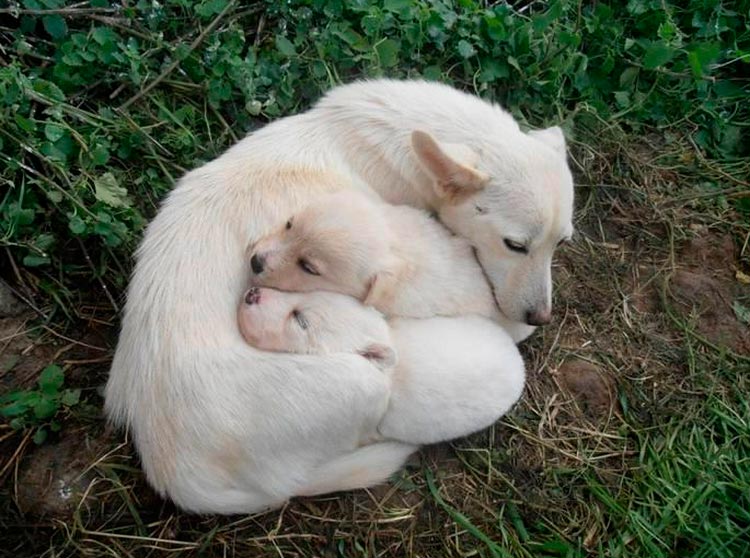
Alopekis are generally healthy and immune. Females are ready to breed once a year, similar to other primitive breeds. They usually give birth easily, and litters are small, with a maximum of five puppies. The average life expectancy is 12-15 years. There is no data on genetic diseases.
Choosing an Alopecis puppy
Those looking to buy an Alopekis puppy shouldn't bother looking for a breeder. There are no kennels in Moscow or St. Petersburg, nor are there any in other countries, including Greece. Currently, only the Greek Society for the Rescue and Rebirth of Alopekis Dogs (Κοινοτητα διασωσης & αναβιωσης αλωπεκιδας) exists, as well as a closed Facebook group that brings together owners and lovers of these small working dogs.
A preliminary standard has been developed for the Alopecia, but since the breed is not recognized even by cynological organizations at the national level, it is impossible to talk about issuing any documents.
Finding a dog similar in appearance and personality in Greece, or purchasing a puppy from owners of "recognized" Alopekis dogs through a community or Facebook group, is the only way to find a loyal friend in an Alopekis. In other words, it will be an ordinary mongrel, but it will be possible to say of it: the Alopekis is one of the most ancient dog breeds!
Price
In an effort to preserve native dogs in Greece, the aforementioned organization often gives away puppies for free or at a nominal price. There is no information on sales abroad. Online ads sometimes list puppies from small mongrels under the resonant name "Alopekis."
Photos
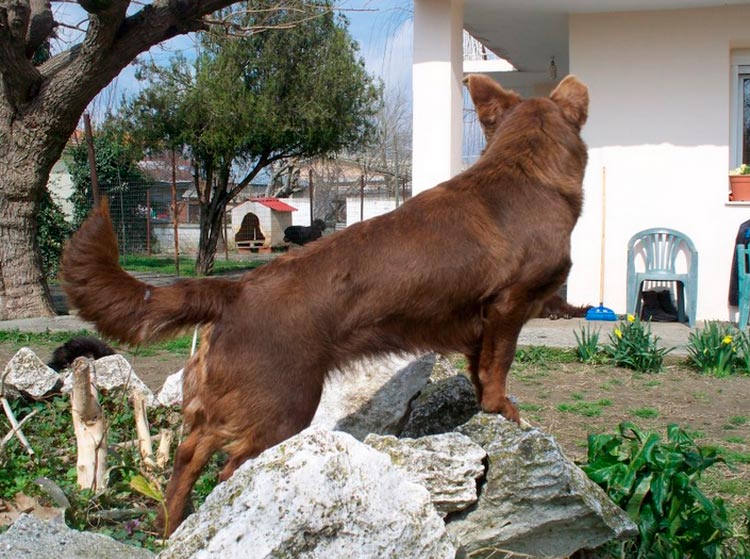
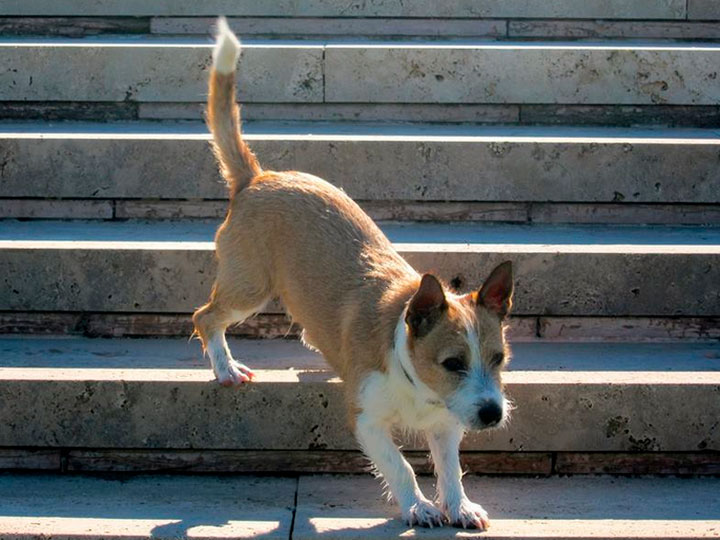
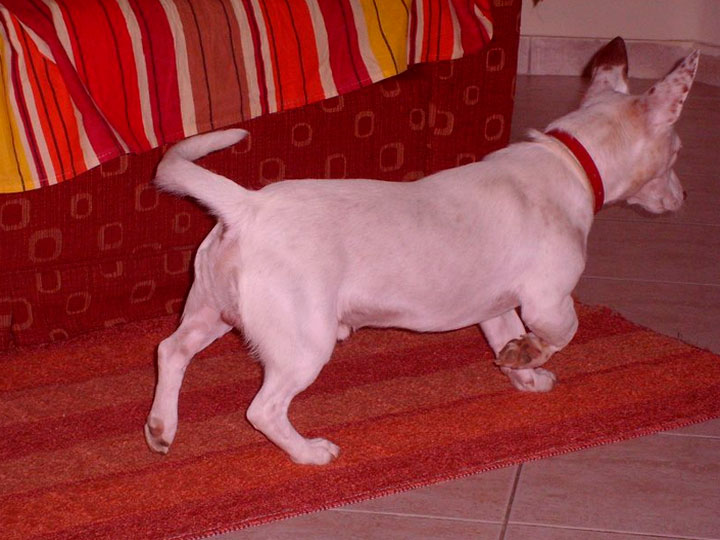
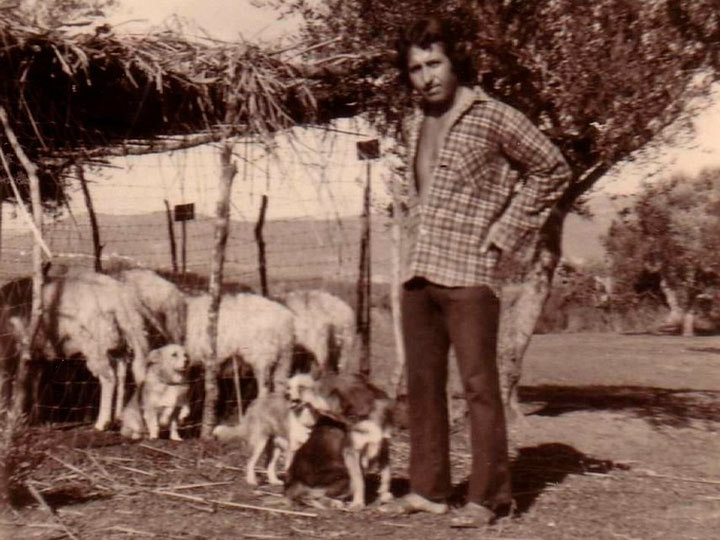
The gallery contains photographs of dogs known in Greece as alopekis (little fox). One of the drawings shows a schematic representation of the "ideal" alopekis, as defined by the standard. The penultimate photo shows a Greek farmer's alopekis in the 1960s.
Video about Alopekis dogs:
Read also:


1 comment
Elena
A very wonderful, smart, strong, and unpretentious dog. We adopted her from a shelter (mixed breed).
Add a comment