
Allergies in dogs: symptoms and treatment
One of the most common health problems in dogs is allergies. They can develop to almost anything. That's why it's so difficult to quickly identify the allergen. But what exactly are allergies in dogs, and how do they develop? Is there a classification system? What are the typical symptoms? And most importantly, how can you help your pet: what should you give your dog for allergies?
Content
- 1 What is an allergy?
- 2 The mechanism of development of an allergic reaction
- 3 What can a dog develop an allergy to?
- 4 Classification
- 5 Symptoms
- 5.1 From the circulatory system
- 5.2 From the digestive system
- 5.3 From the nervous system
- 5.4 From the side of thermoregulation and other systems
- 5.5 Food allergy
- 5.6 Flea allergy dermatitis (allergy to flea bites and their excrement)
- 5.7 Atopic dermatitis
- 5.8 Autoimmune
- 5.9 Contact dermatitis
- 5.10 Medicinal
- 5.11 Allergic otitis
- 5.12 Infectious allergy
- 6 Treating a dog with allergies
What is an allergy?
In scientific terms, an allergy is an increased and qualitatively altered reaction of the body to the entry of substances of an antigenic and non-antigenic nature, or immune reactions occurring in a sensitized (sensitization is increased and altered sensitivity) organism.
Simply put, it's the body's reaction to a substance that triggers an abnormal "response." This substance "shakes up" the animal's immune system, causing the body to try to fight it by producing antibodies (class E). Normally, these antibodies make up only 0.03% of the total—a very small amount. As soon as their numbers begin to increase, the immune system's sensitivity immediately becomes "distorted."
Allergies are most often observed in animals with a compromised immune system, as well as in those with an allergic constitution (increased permeability of blood vessels, skin, and tissues of the respiratory and digestive organs).
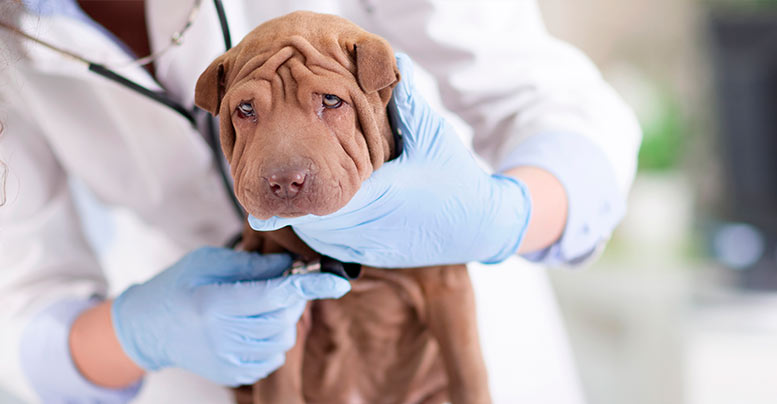
If a dog has an allergic constitution, the immune system's feedback loop is not triggered, meaning class E antibodies continue to be produced (even after their levels have reached normal levels). This "hypersensitivity" can be inherited and often develops later in life.
What can trigger the development of allergies in a perfectly healthy animal? Frequent vaccinations (a jolt to the immune system; don't give them more often than recommended). according to the vaccination schedule), use of expired medications, frequent contact with synthetic substances, etc.
By degree of sensitivity (propensity to allergies) in descending order: guinea pigs, rabbits, sheep, goats, cattle, horses, dogs, pigs, birds, monkeys, humans.
The mechanism of development of an allergic reaction
There are 3 stages in the development of allergies:
- Stage of immune reactions
- Stage of pathochemical changes
- Stage of pathophysiological disorders
Stage of immune reactions
In response to allergens, a body with an altered immune system produces a huge number of class E antibodies and T-lymphocytes, which attach to the surface of cells and tissues. This makes these cells hypersensitive to repeated exposure to the allergen.
If a large number of antibodies and T-lymphocytes attach to tissues, they are called shock cells. They are the first to react to an allergen entering the body. Shock cells most often include blood vessel walls, smooth muscles, skin, and tissues of the respiratory and digestive organs.
All this happens during the body’s initial “acquaintance” with the allergen.
Stage of pathochemical changes
When allergens re-enter the body, they interact with class E antibodies and altered T-lymphocytes located on the cell surface. This interaction results in cell damage and destruction. As a result, a large number of active substances are produced—histamine, serotonin, and bragikinin.
Stage of immune reactions
The resulting biologically active substances enter the bloodstream, spread throughout the body, and cause dysfunction in organs or tissues. Most often, dysfunction is detected in the tissues that are in shock. Other tissues react to a lesser degree.
What can a dog develop an allergy to?
Substances that can alter the body's sensitivity (increase it) are called allergens. The most common are viruses, bacteria, fungi, helminths (and the toxins they secrete during their life cycle), and poisons.
There are also exogenous factors (coming from outside). These include:
- Medicines
- Substances of animal origin (fluff, wool, feathers)
- Foreign proteins (enzymes and hormones)
- Pollen of plants, some types of herbs and flowers (especially home ornamental ones)
- Insect and reptile poison. For flea bites, ticks, mosquitoes and other bloodsuckers, as well as their waste products
- Household chemicals
- Food (milk, berries, cereals, etc.).
But the rarest are "internal" (endogenous) allergens. They can also be called autoallergens. These are the body's own defective cells or tissues. There have been cases of animals developing allergies to the lens of the eye, thyroid tissue, testicles, and gray matter.

Classification
Allergic reactions have several classifications:
By the rate of occurrence
Immediate allergy – Allergy symptoms in dogs appear just 3-5 minutes after the allergen enters an already sensitized (hypersensitive) body. This means the animal has already been exposed to the allergen at least once.
Delayed allergy – in this case, the dog’s allergy symptoms appear within one to two or three days after the “irritant” enters the body.
By type of allergen
- Infectious – develops upon the entry of a pathogenic agent into the body. For example, the pathogen causing tuberculosis, brucellosis, leptospirosis and others.
- Serum-induced – occurs after the introduction of serum (prepared antibodies against a disease) into the body. For example, tetanus toxoid.
- Food - for any component of feed.
- Plant - on pollen or the plants themselves.
- Medicinal – for the component of the drug.
- Household – mold, dust, even food for other pets (fish, rodents).
- Autoallergy – to one’s own defective cells.
- Idiosyncrasy is a congenital hypersensitivity to certain foods.
By the nature of sensitization
Non-specific – when sensitivity is increased by exposure to one type of allergen, but the body will react to another. Even non-specific allergies in dogs can be divided into two subtypes:
- Heteroallergy is when sensitization occurs due to a non-antigenic allergen, but a reaction occurs as soon as an antigenic allergen enters the body. In layman's terms, a cold is a non-antigenic factor, while an invading virus or bacteria is antigenic. Therefore, a cold weakens the immune system, cells and tissues become more sensitive, and invading pathogens trigger an allergic reaction.
- Paraallergy – although one allergen causes sensitization and the immune system responds to another, both irritants are antigenic. For example, viral infections always weaken the immune system, and the invading bacteria become a "second" antigenic allergen.
Specific – a reaction to the same allergen. For a reaction to develop, the "irritant" must enter the body twice (the first exposure increases sensitivity, the second provokes the appearance of clinical symptoms).
Depending on the degree of violation
General – the functions of all organs and systems are impaired. Most often, it develops in response to food.
Local – a reaction at the injection site/direct contact. For example, after drug administration. Swelling, redness, puffiness, and even pus may appear. Often, multiple injections of the allergen are required.
Symptoms
Allergy manifests itself as a disruption of the functions of organs and systems.
From the circulatory system
Hemorrhages (including on the skin and visible mucous membranes), congestion, changes in blood pressure (both decrease and increase).
From the digestive system
The most frequently recorded allergy symptoms are vomiting, diarrhea, and changes in enzyme activity.
From the nervous system
Convulsions (involuntary muscle twitching) or, conversely, paralysis may occur.
From the side of thermoregulation and other systems
Body temperature changes, swelling appears, and joints swell. If the dog had chronic illnesses, they will worsen and begin to bother the pet again. Itching, scratching, sneezing, and twitching may occur, and, in very rare cases, involuntary urination and defecation may occur.
Now let's look at what symptoms are characteristic of different types of allergies in dogs.
Food allergy
Rash, redness on the skin, severe itching, hair loss. Visible on the skin dandruffThe tissues themselves are dry, but there are wet patches in the chest and armpits. Bowel movements change, and vomiting may begin. If you look into the mouth, you may notice inflammation of the gums (stomatitis), and the smell from the mouth changes. Allergy symptoms in dogs may disappear (or worsen) as soon as the diet is changed. There are dogs that have chicken allergy.
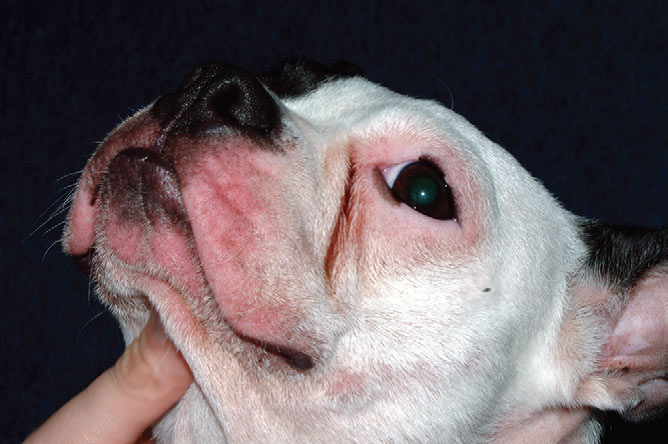
Flea allergy dermatitis (allergy to flea bites and their excrement)
Presence of bloodsuckers. If you don't see these little critters, you can shake the fur with a piece of white paper or comb it. You'll immediately notice black dots on the paper. Bite marks (pinpoint redness) and scratches are visible on the skin. Hair loss may occur (especially in areas of intense itching). Severe redness may also be present in the groin area.
Atopic dermatitis
Young dogs, aged between one and three years, are most often affected. Lesions appear on the face, armpits, ears, paws, and groin. Pets tend to lick the affected areas. Weeping areas may also be observed.
Autoimmune
Erythematous blisters appear on the skin. Cutaneous vasculitis, lupus, erythema multiforme. Epidermal necrolysis (tissue death) is also recorded.
Contact dermatitis
Redness and itching appear in areas where the skin came into contact with the allergen. If the animal is intolerant to household chemicals, symptoms of dermatitis will appear on the feet, paw pads, scrotum (in males), and abdomen. Eczema will develop between the toes.
Medicinal
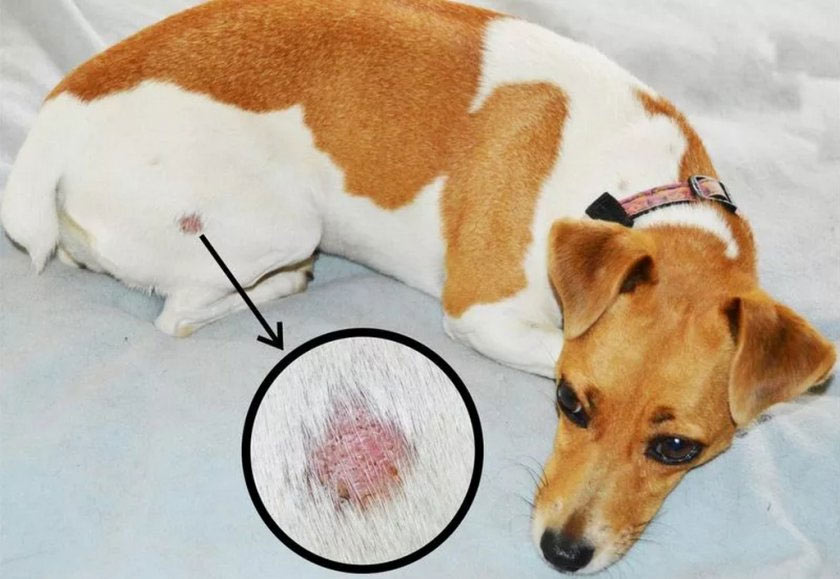
It develops immediately after taking the medication. The main symptoms are clearly defined lesions, with almost all of the rash occurring on the face. The urticaria disappears as suddenly as it appears. The most dangerous symptom is anaphylaxis.
Allergic otitis
It presents like a typical middle ear infection: redness, itching, exudate, scratching, swelling, and increased temperature of the auricle. However, it can only be distinguished from a typical otitis media by a bacterial culture.
Infectious allergy
It exhibits symptoms similar to those of a disease. Viruses, bacteria, and fungi act not only as allergens but also as pathogens.
Treating a dog with allergies
Treatment for dogs with allergies must begin as soon as possible. Otherwise, anaphylactic shock (pharyngeal paralysis and possibly angioedema) may develop. Therefore, as soon as you notice allergy symptoms in your dog, contact your veterinarian immediately.
First, you can have your pet tested (the doctor will notice any characteristic abnormalities). Then, it's necessary to determine what triggered the change in sensitivity. Without eliminating the underlying cause, it will be impossible to cure your pet. Not only will the symptoms return, but the attacks will become increasingly severe and frightening.
Therefore, if a dog has reacted this way to food, a corresponding diet will need to be selected for the rest of its life. If it's allergic to fleas or bloodsuckers, its skin will need to be examined regularly to remove any parasites. Prevention (shampoos, collars, drops, and sprays) should be used, but these must be chosen carefully to avoid triggering a new attack. If it's allergic to plants, it's best to keep your pet as far away from flowering plants as possible, make your home safe, and always carry allergy pills with you when you go for walks.
What can I give my dog for allergies? Antihistamines are used as emergency treatment: diphenhydramine, suprastin, pipolfen, calcium gluconate, and tavegil. The dosage should be calculated based on the pet's weight.
You can also ask our website's staff veterinarian a question, who will answer them as quickly as possible in the comments box below.
Read also:


20 comments
Emilia
Good afternoon. Thank you for the article. I think all dogs, regardless of breed, have allergies. My dog had a food allergy, and as prescribed by the vet, I gave him Enterozoo along with his diet. I should say that after a few days, the allergy was noticeably improving.
Adriana
Good evening. Yes, I agree that all dogs can have allergies. By the way, I'd like to say that our methods for dealing with allergies are the same. I wish our pets good health.
Elena
Good afternoon
We have a six-month-old golden retriever. A week ago, red spots appeared on the dog's belly and the inside of his hind legs, some of which were covered in a small crust. At a veterinary appointment, ringworm was ruled out and the doctor prescribed suprastin, 1/2 tablet twice a day for 3-5 days, and a recommendation to avoid all food except dry food. After a week of treatment and diet, there has been no significant improvement.
The dog isn't itching or in pain. We gave him a Bravecta pill on March 31st. We dewormed him with Prazitel on March 10th. He's active.
We have been using Hill's Puppy Large Breed Chicken dry food since 3 months.
Please advise what is the best course of action. Perhaps some tests or a change in food? Thank you.
Daria is a veterinarian
Hello! Blood work should have been done immediately for a complete blood count and biochemistry panel to assess internal organ function. If eosinophils had spiked, it would clearly be an allergy. If you're still on the same food, then therapy clearly won't work. Anything with chicken is most likely to cause an allergic reaction (and golden retrievers are notoriously allergic). Hill's has a line for allergy sufferers. First, give Hill's z/d for about two weeks, then switch to Hill's d/d. Don't give blood work now, as we've already given an antihistamine. Suprastin should not be given for more than three days! They relieve an acute allergy attack, then switch to a weaker medication that can be given longer.
Natalia
Hello!
A female French bulldog, almost four months old, had already had her first vaccination when she became ill, was eating homemade food, and hadn't left the apartment. Three weeks ago, she started itching. Over time, patches of hair loss appeared, making her slightly bald. Sometimes, redness and pimples developed, along with itching and scabs, mostly in the ears, eyes, paws, and abdomen. A week later, these symptoms recurred, and we took her to the vet. The doctor examined her, took a scraping, and found mite eggs, but it was unclear what kind because no mites were found. The diagnosis was ectoparasites and possible food intolerance. She was prescribed a special shampoo, a change of food, and Bravecta tablets. Three days later, the itching persisted, and we were also prescribed an anti-itch suspension. As a result, the scabs cleared up and the itching decreased, but it didn't go away. After we stopped all the medications, the itching still persisted, but not as severe. Redness occasionally appeared (on the ears, eyes, paws, and belly). Hair loss is still present, but not as severe. It's been 10 days since the treatment began. Today we went for a checkup and were told to change the food again; apparently, that's the problem. The situation with the disease is unclear, so I'm asking for a consultation and good advice on what to do next. Is the diagnosis correct?
Daria is a veterinarian
Hello! This is a strange diagnosis. Ectoparasites, although the mites are scabies. We didn't find any adult mites—we should have repeated the scraping in 10-14 days to ensure the adult mites had already appeared. Blood work is needed—at least a general analysis. Bulldogs are very allergic (as are most brachycephalic breeds), so food selection should be careful (like weaning for babies). Try 1/4 of a suprastin twice a day for up to 3 days if the allergy is to food—the itching will subside. Use special food for allergy sufferers (the same one in Purine has z/d and d/d). It contains one type of protein and one type of carbohydrate, already broken down, so digestion is not an issue, and allergies to them almost always go away. Mites are not easy to kill, especially if you have allergies and a weakened immune system. Therefore, an accurate diagnosis is needed first.
Natalia
Thank you so much! We bought the hypoallergenic food from Purina, plus they recommended some extra vitamins. We also took them because we were experiencing vitamin deficiencies (she was chewing walls and eating her own poop). We'll feed her some and see how she recovers from the illness.
Daria is a veterinarian
Observe! Which one did you choose? Z/D can't be given for long, up to a month. It's specifically for relieving acute allergic reactions. D/D, on the other hand, is suitable for lifelong feeding (although for some, 2-3 months is enough to relieve symptoms, cleanse the body, and identify the allergen). Maybe you could look at the food you were feeding and see what it contains (what type of grain and meat, the percentage, any other additives). Not only vitamins are needed, but also minerals (micro and macronutrients, including calcium and phosphorus).
Natalia Alekseevna
Good afternoon!
Shepherd, 3 years old. Adopted from a breeder on October 10, 2018. We noticed swelling in her hind paw, initially minor, but it progressed. We took her to the veterinarian, where she was examined and found no abnormalities. There was no tachycardia or arrhythmia, and her blood work and biochemistry profile were normal. She doesn't limp, isn't interested in her paw (she doesn't lick it), and isn't painful to the touch. Pressing with a finger leaves an indentation that gradually smooths out. She was prescribed Lasix, 6 ml daily for 10 days.
The dog's previous owner denies any previous illnesses.
They punctured it, the swelling decreased, almost to normal, but now it’s gradually increasing.
Daria is a veterinarian
Hello! Yes, it looks like the dog has swelling. I would recommend an X-ray, including a soft X-ray, to assess the condition of the soft tissues. A lymphatic vessel may be compressed, causing impaired lymph flow. It could even be lymphoextravasation. There could be an inflammatory process in the tissues. A diuretic alone won't be enough. Nonsteroidal anti-inflammatory drugs may be needed.
Oks
Hello! I have a 10-year-old male Golden Retriever. Since puppyhood, we've fed him dry dog food, either Dog Chow, chicken, or turkey. This year, he developed purulent ulcers all over his body. The hair started falling out in the affected areas. We went to the vet, got tested, and the results showed a lot of allergens in his blood. They also did a blood test and found staph. They prescribed a bunch of medications and injections. They tried everything, and for a while, the smell went away, but after about two weeks, new ulcers and the smell started appearing. Could you tell me what else we should do? It's painful to watch my pet suffer and scratch.
Daria is a veterinarian
Hello! Have you changed your pet's diet? What are you currently feeding? This breed is quite prone to allergies, so feeding must be carefully selected. How did you treat the staph infection? Did you perform a skin scraping after completing the treatment (a week after recovery and discontinuing antibiotics)? Did you change the pet's bedding at home? Did you thoroughly clean and disinfect the house? Staph is highly resistant to antibiotics, so medication should be selected based on sensitivity titration. Did you use chlorhexidine on the skin during treatment?
Oks
Yes, now Pro Plan dermatosis and buckwheat porridge with chicken and vegetable soup.
Treatment 1: Polivak, Dexafor, Exekan, Doctor Shampoo with Climbazole, Akriderm GK, Hemobalance, Trivit. It improved for a while, but a week later the spots returned.
Treatment 2: Gentamicin, Ketoconazole, Hemovit. What's the situation? Improvement, then the spots return.
3 treatment: Dexafor, Exekan, Hydrogen peroxide for wound treatment, Marfloxacin.
Treatment: Polysorb, Cetrin, Stop-sud, Timogen, Farmavit for aging dogs, Trivit, ketaconazole shampoo and Cytoderm shampoo, Ursasan, Fitoelita for clear skin. There were no signs for two weeks, but now the spots have appeared again. We didn't do a second scraping because we couldn't get rid of the sores.
There is no bedding, he sleeps wherever he is comfortable, we wash the floors with bleach, we were not told to wipe them with chlorhexidine.
Daria is a veterinarian
Get rid of the chicken!!! Didn't your vet tell you about this? This is the first thing they say to rule out in animals showing signs of allergies. Try switching to Hill's d/d (then you can switch to z/d after 3 months). It contains one type of protein and one type of carbohydrate, which are hydrolyzed ("broken down"), which reduces the risk of developing an allergy to 0. And feed only dry or wet commercial food. No natural foods. A scraping wouldn't hurt to determine whether the staph has disappeared. Improvements should have been seen with the third treatment regimen: a hormone and a strong broad-spectrum antibiotic. How many days did they inject Marfloxacin for? Did they use anything for mites? They could have at least given them an injection of Ivermectin at the clinic to rule out subcutaneous mites (you never know if they were missed in the scraping; deep scrapings should have been taken in several places along the border between healthy and diseased areas). Chlorhexidine is an inexpensive but effective antiseptic. Start by changing your diet and giving absorbents, plus a couple of days of antihistamines (half a dose of Suprastin twice a day for no more than three days in a row, as it has side effects on the kidneys). See if the itching and discomfort improves within a couple of days.
Oks
Thank you very much for the consultation. We were given Marfloxacin injections for 10 days, and there was some improvement, but everything kept coming back. They didn't give us anything for the ticks.
Daria is a veterinarian
This means the cause hasn't been eliminated, since everything returns after stopping treatment. Conclusion: the animal wasn't properly examined. Scrapings should be repeated (from multiple sites), and the feeding should be reviewed.
Tatiana
Hello! Female dog, 6 months old. Labrador. Subcutaneous bumps. Scratching. 2 days. I gave her buckwheat and corn porridge on her chicken navels. First time. We treated her for fleas and dewormed her. Presumably it's the porridge. Please advise. What's going on? Thanks in advance.
Dasha is a veterinarian
Hello! Alternatively, switch to buckwheat only. No corn, millet, semolina, barley, or other small grains prohibited for feeding dogs. No chicken of any kind! Charcoal, enterosgel, or other adsorbents should be given for a couple of days. You can take 1/4 tablet of suprastin in the morning and the same amount in the evening with food for no more than 3 days! Allergy sufferers usually experience relief on the first day. However, if the condition persists on the second day, and the itching and bumps don't go away, consult a veterinarian! Have your veterinarian do a scraping to rule out subcutaneous scabies mites.
Elena
Good afternoon. My puppy has hives all over his body, in the form of subcutaneous blisters. How can I treat them? Thanks in advance. We haven't changed his diet, and he's been outside for a long time.
Dasha is a veterinarian
Hello! What is the breed, age, diet, living conditions, and veterinary treatments (vaccinations, deworming, vitamin supplements, or other medications)? Has the animal been outside for a long time? Does this mean it was homeless or kept in a yard? Ideally, the animal should be examined, have a scraping taken, and be checked for subcutaneous mites. Also, have a biochemistry panel and a complete blood count performed to rule out an allergic reaction. Check for skin and intestinal parasites (if there hasn't been any recent preventative treatment), but only after the tests are completed. Otherwise, the results won't be informative after medications are administered.
Add a comment