
Alano (Alan dog, Spanish bulldog)
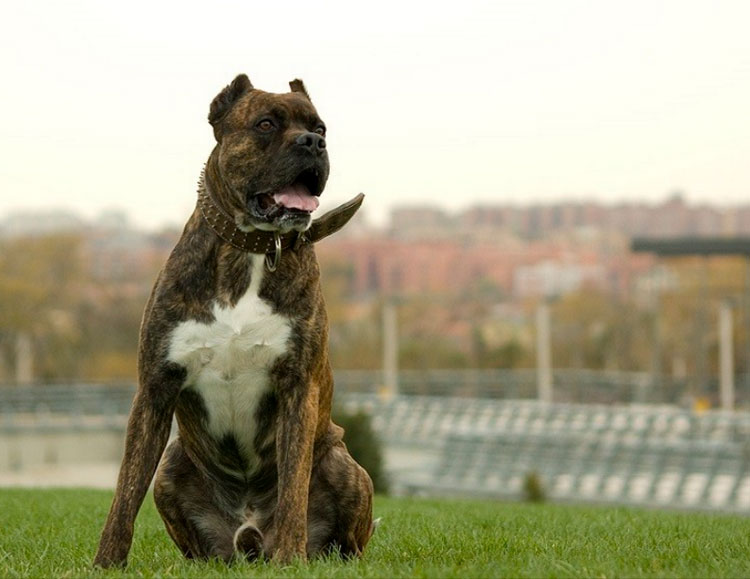
The Alano is a typical hunting dog with a powerful grip and a balanced personality. The breed is very ancient; in Spain, it was used for centuries for hunting large game and for bullfighting. Recently, Alanos have proven themselves to be excellent guard dogs, family dogs, and companions. Despite their impressive appearance, they are not aggressive toward other dogs or people. They are very devoted to their owners, reliable, and affectionate within the family circle. Another name for the breed is the Alanese dog, or, in Spanish, the Alano Españolo. In English-speaking countries, the Alano is called the Spanish Bulldog.
Content
History of origin
Dogs of this type arrived in the territory of modern-day Spain with the Alani people around 400 AD. Here, in the Pyrenees, the people encountered a huge wild bull and began using their war dogs to hunt large game. The Alani later migrated to North Africa, but some of their dogs remained on the peninsula. The earliest written references to Alan dogs date back to the 11th century.
The chronicles of King Alfonso the Just, who was a great hunter, say that the Alan dog bites not because it's hungry, but because it has an innate desire to seize anything that moves. For centuries, Alans traditionally participated in bullfights. In the twentieth century, dogs were banned from fighting bulls, and the breed began to disappear, as most of the herd was bred specifically for this purpose. In 1915, driven hunts for large game were also banned. Civil war soon broke out. All these events led to the Alan breed almost completely disappearing. Only the use of some Alans in livestock farming saved the breed from extinction. Alan dogs worked as guards on farms and helped in the search for livestock. They did not harm the animal, but simply held it in place by biting its ears and hooves, allowing the shepherd to approach and tie it up.
A group of enthusiasts led by cynologist and veterinarian Carlos Contreros succeeded in reviving the Alano. In 1975, they began searching for Alanese dogs throughout Spain. About 45 specimens were found, from which 10 bloodlines were developed. In Spain, about 20 dog breeders are involved in the breed, a third of whom breed only show dogs. There are only about 1,000 Spanish Bulldogs worldwide. The breed is not recognized by the International Cynological Association, only by the Spanish Kennel Club and several other organizations in its country of origin and abroad. Alanese dogs have been involved in the development of several other breeds, for example, Argentine Dogo, boxer, Staffordshire Terrier. Common features in appearance and character allow us to speak of the relationship of the Alano with Canary Dog And Spanish Mastiff.
Purpose
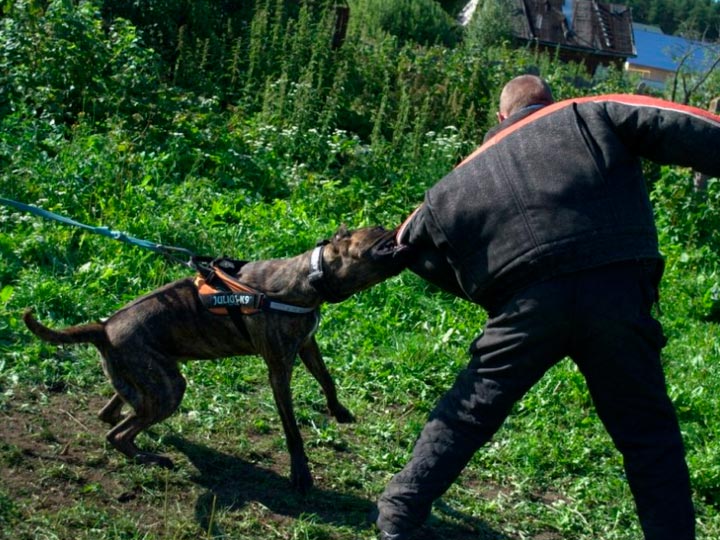
The Alano Espagnolo is primarily a hunting dog, designed to drive large game such as wild boar and deer. Their fighting heritage does not indicate aggressiveness toward their fellow dogs, as Alanos were primarily used for bull-baiting. Their loyalty to people makes them excellent companions and guard dogs. However, they do not place an emphasis on guard duty. Alanos can be found among service dogs and in various sporting competitions. The most suitable disciplines for the Alano are weight pulling and canicross.
Video about the Alano dog breed (Alanese dog, Spanish bulldog):
https://youtu.be/CXiNKkjIXOc
Appearance
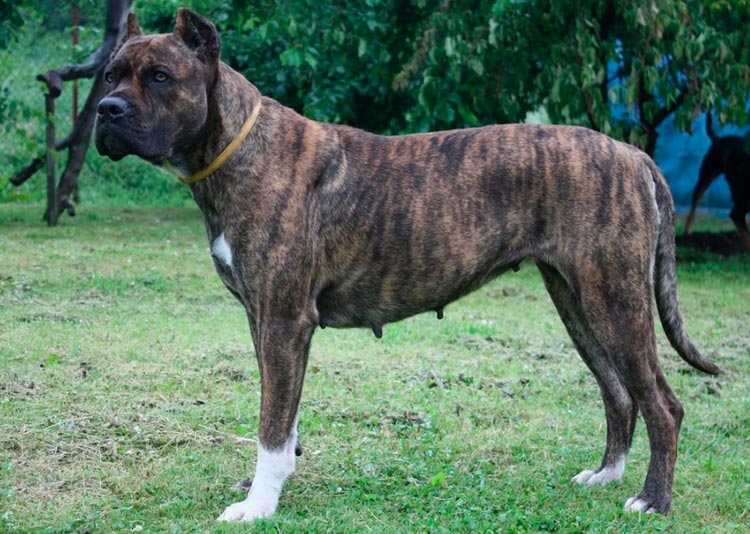
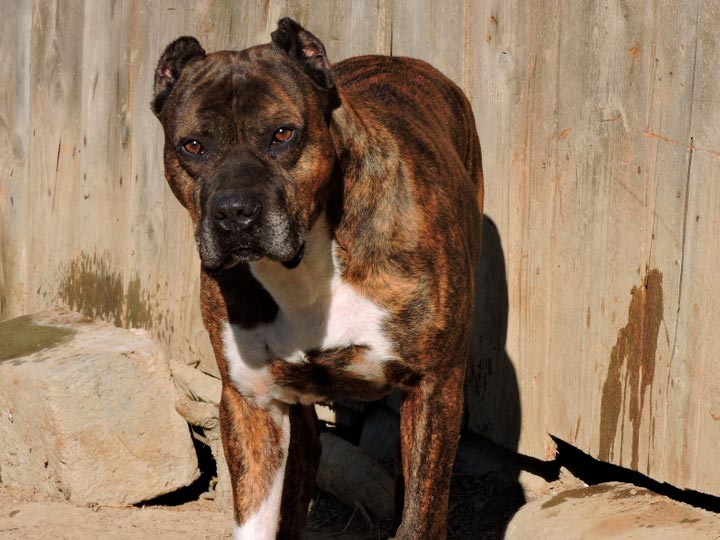
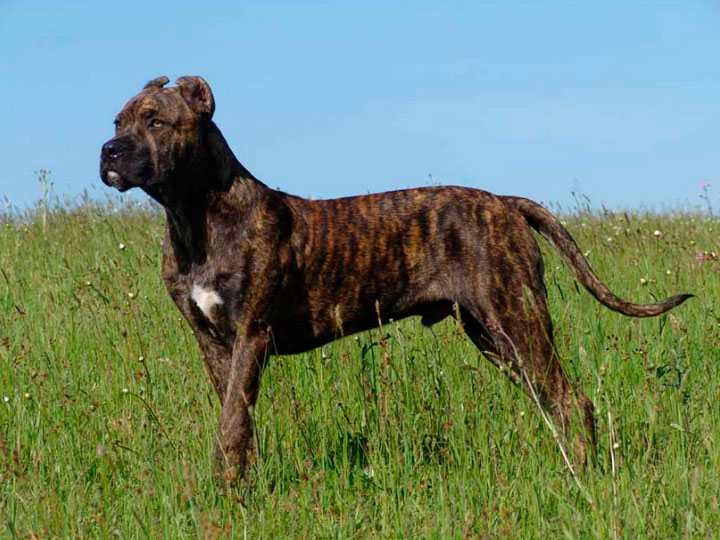
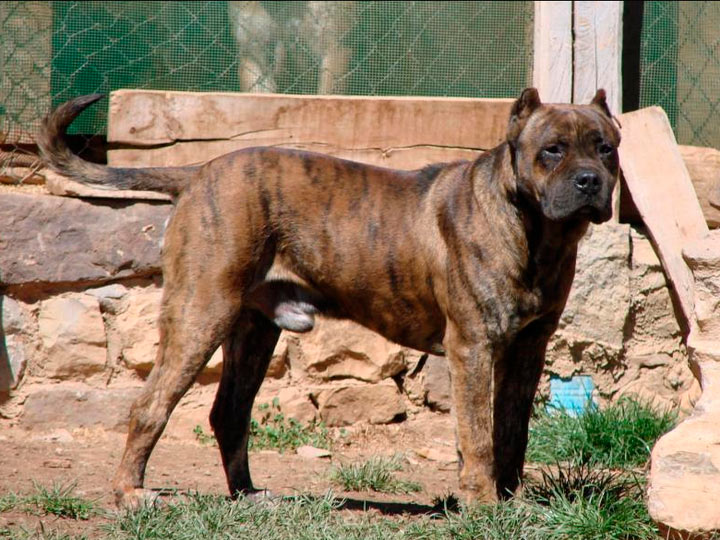
The Spanish Alano is a Molossian-type dog with a harmonious, athletic build and feline grace. Its appearance should convey speed, agility, and strength. The body is elongated. Sexual dimorphism is well-defined. The height at the withers for males is 58-63 cm; weight is 30-40 kg. The height of females is 55-60 cm; weight is 25-35 kg.
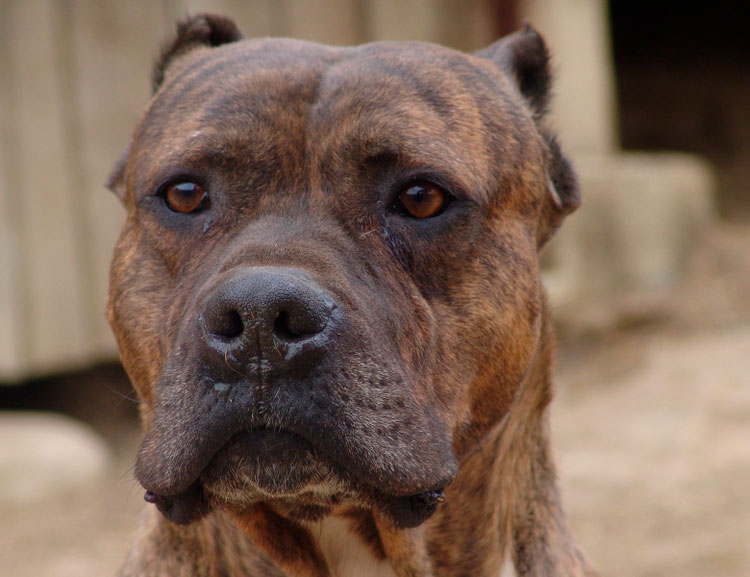
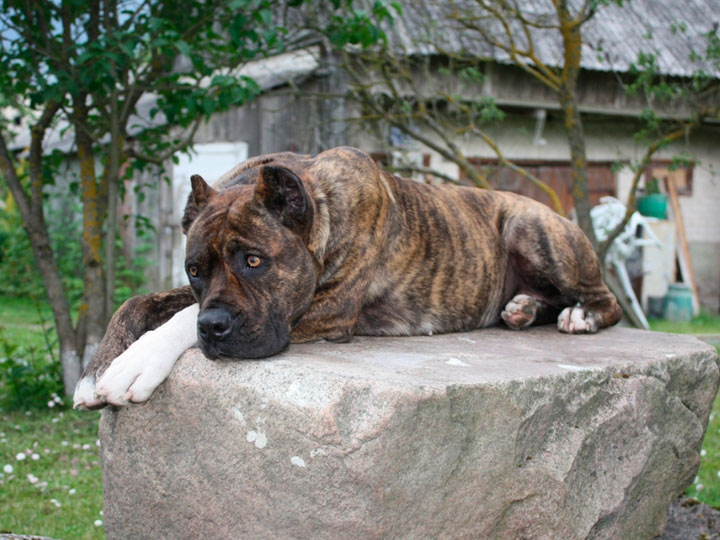
The head is large, powerful, and square. The profile is slightly convex, the skull is flat between the ears, wide, and has well-defined frontal sinuses. The skin on the head is smooth; when excited, small folds may appear between the ears. The muzzle is relatively short, accounting for 35-37% of the total head length. The chin is wide, the lips are moderately thick and black, with the upper lips slightly covering the lower lips. The jaws are well developed and strong. The teeth are healthy and large, with a reverse scissors bite and a slight undershot bite. The absence of the first premolar is tolerated. The cheeks are well developed. The eyes are medium in size, round, and amber or yellow in color. The eyelids are black and tucked up. The ears are medium in size and set wide apart. Traditionally the ears are cropped short. In their natural state they are hanging.
The body is elongated, with the length exceeding the height at the withers by 10%. The back is straight. The loin is relatively long. The croup is slightly sloping and wide. The chest is deep and of medium width, reaching down to the elbows; its width is approximately 30% of the height. The belly is moderately tucked up. The tail hangs down, reaching the hock joint, and is straight. The legs are strong, well-muscled, and straight. The hind legs are moderately angulated. The toes are arched, not too tightly pressed together, the nails are short and strong, and the pads are durable.
The skin is tightly fitting to the body, slightly looser around the head and neck, and thick. The coat is short and dense. The guard hairs are firm in texture. The undercoat is short and fine. Colors include yellow, fawn, brindle, and wolf. All colors come with or without a black mask.
Character and behavior
The Alano combines hard work, a strong hunting instinct, beauty, firmness, and affection for people. It is very easy to train a family dog that will be affectionate and patient with childrenSerious and formidable in appearance, the Alano possesses a noble, even temperament. This very strong yet calm dog has a strong sense of self-worth and a desire to lead. It obeys only a strong-willed owner who can become its leader.
The true Alan dog is noble, not aggressive toward other dogs or people, not shy, and not nervous. Somewhat independent, intelligent, and even-tempered, it values companionship and is a team player.
The Alan dog possesses all the traits of a good hunter of large game, such as boar or deer. It is spirited, bold and courageous, resilient and fearless, and passionate about the hunt. Even if it grabs the throat of a boar four times its size, the dog will not let go of its prey, even if it means death. However, it does not harbor any overt hostility toward the animal; once its owner arrives, it retreats and loses interest in the prey, whether it be a boar or found livestock.
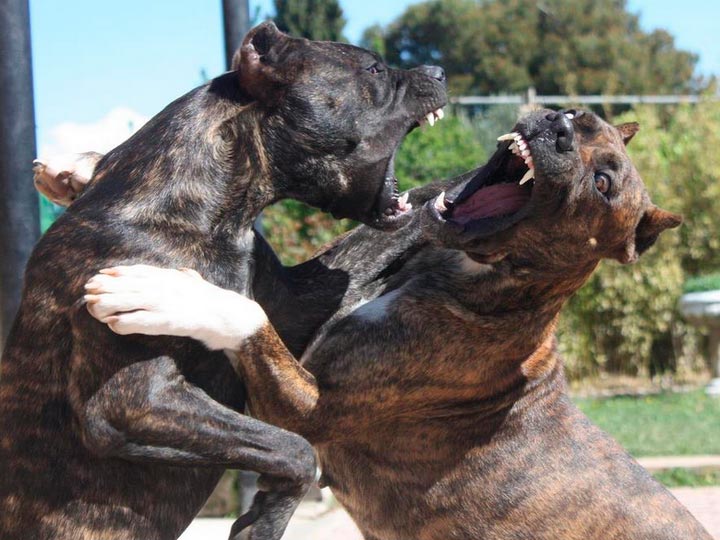
An excellent watchdog and guard dog, silent and unfazed. In any task, the Alano knows when to be reserved and when to display all its agility and agility. It is very resilient and has a well-developed sense of territory. Throughout its history, Alanos have been used for various purposes, but almost always worked in teams with other adult dogs, often of the same breed and sex. Therefore, unlike other large fighting dogs, they easily coexist with dogs that share their territory. On walks, they are not prone to conflict. They ignore smaller dogs, and will respond to aggression from larger ones, but will not initiate fights. They are usually indifferent to their cats.
Education and training
Alanos are quite difficult to raise and train, especially for a beginnerThis is a dog with a strong character and a mind of its own. Early and comprehensive socialization is essential. Throughout its life, the Alano requires constant work, training, and the development of positive qualities and skills.
The Alano loves to work and learns quickly. In experienced hands, training and obedience are easy. The Alano is considered to be more obedient than other Molossoid breeds, but this also depends heavily on the owner's authority.
Content Features
The Alano does not adapt well to house or apartment life. This large dog requires a lot of exercise and activity. The ideal environment is a private courtyard. Alanos adapt well to a variety of climates. While active, they can easily tolerate temperatures down to -20°C (-4°F). At lower temperatures, there is a risk of frostbite on sensitive areas of the body (ears, nipples, and toes). In kennels, Alanos are usually kept in spacious enclosures with insulated kennels. They are ill-suited for city life, where their natural activity and hard work ethic are often wasted. Bored young dogs can often be destructive.
Along with the Cane Corso, the Alano is one of the few Molosser-type breeds that does not snore or drool.
They require a great deal of exercise, long walks, free running, and opportunities to develop their natural hunting and tracking talents. Some Alano owners keep or buy male dogs solely for hunting purposes.
Care
Alanos don't require extensive grooming. Regular brushing with a brush or a mitten designed for short-haired breeds is sufficient to remove overgrown hair and maintain a neat appearance. Seasonal shedding is moderate. Bathe as needed. The eyes, ears, and nails are carefully maintained. Ears should be inspected weekly, but ear cleaning is usually less frequent. Nails should normally wear down on their own; if this doesn't happen for some reason, they are trimmed to the appropriate length as they grow.
Nutrition
To stay healthy, the Alano requires a complete, balanced diet. It adapts well to any type of food: homemade or ready-made dry food. In the latter case, the diet is usually supplemented with natural meat products. During periods of intense physical activity and in cold weather, the overall caloric intake is increased by 1-1.5 times. Alano dogs rarely suffer from food allergies and generally do not have special dietary recommendations. Food is selected based on age and size. A natural diet is formulated according to standard dog breeding guidelines. At a young age, supplements are recommended for proper development of the musculoskeletal system. To increase muscle mass, it is important to provide the dog with natural meat and exercise, rather than overfeeding protein and protein-based supplements.
Health and life expectancy
Currently, there are no known health problems in the breed. The ancient breed was revived under the guidance of a cynologist and veterinarian, and selection was carried out according to a professionally developed program. However, the reason could also be the small population and the lack of any targeted research in this area. In any case, the Alano Español is considered a healthy breed genetically. Life expectancy is usually 10-12 years.
Breeders and owners note that Alanos have a very strong immune system, excellent blood clotting, and excellent tissue healing. This does not eliminate the need for vaccinations and parasite treatment.
Choosing an Alano puppy
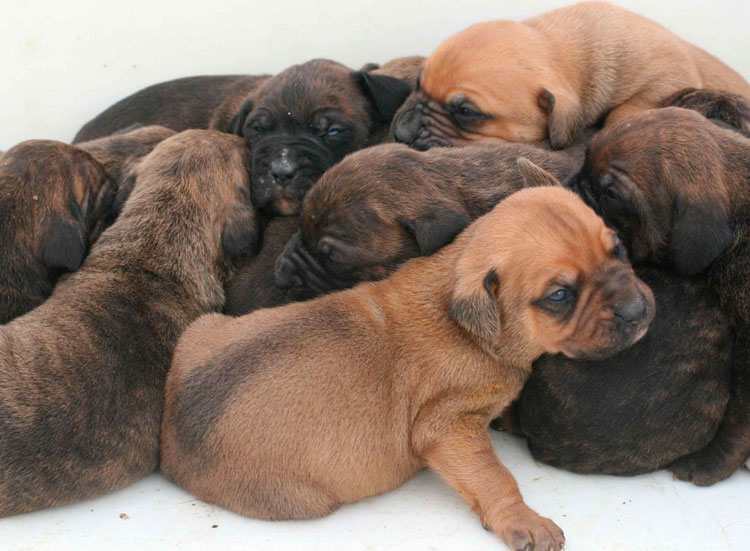
The majority of the Alano breed is concentrated in Spain. Large kennels exist in Italy and France. Outside of these countries, dogs are very rare. In Russia, there are already breeders who professionally breed Italian Bulldogs. The overall population remains small, but a National Club for the breed has been established, which helps unite breeders and assists in finding puppies for future owners.
There are approximately 100 Alan dogs in Russia. Not all owners are involved in breeding, let alone pedigree breeding. Just a few years ago, there was only one Alano Espagnolo kennel, in North Ossetia, but every year the number of dogs and breeders venturing into professional breeding is growing. Every purebred puppy must have a tattoo and a puppy card. Testing of the parents of the offspring for hip dysplasia is encouraged.
Price
The price of an Alano puppy in Spain ranges from 700 to 1,200 euros. In Russia, a well-bred Spanish Bulldog costs around 60,000 rubles.
Photos
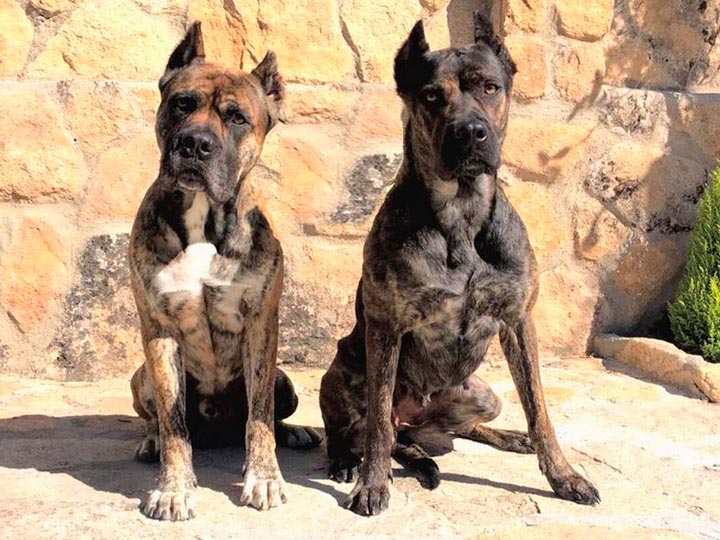
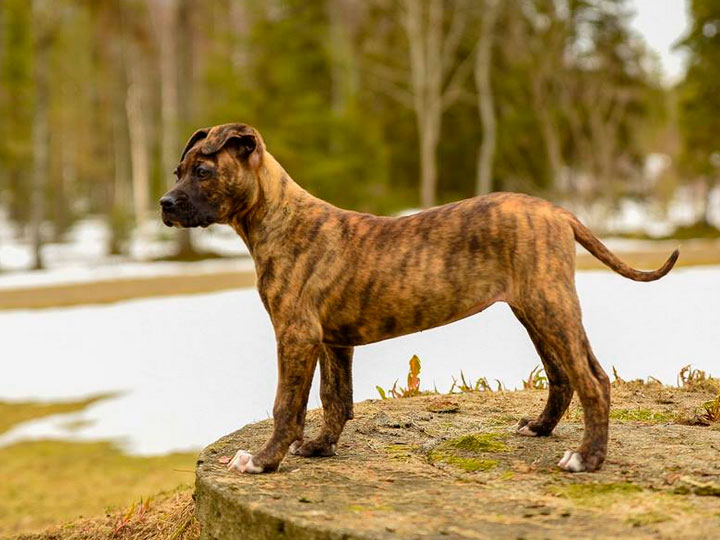
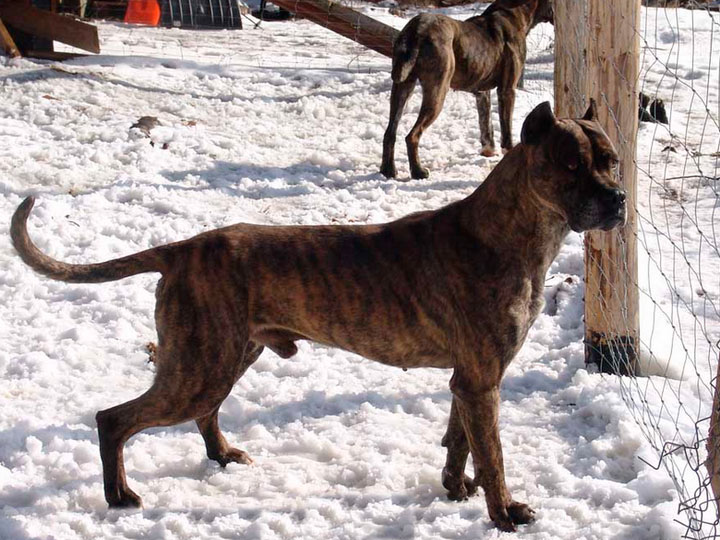
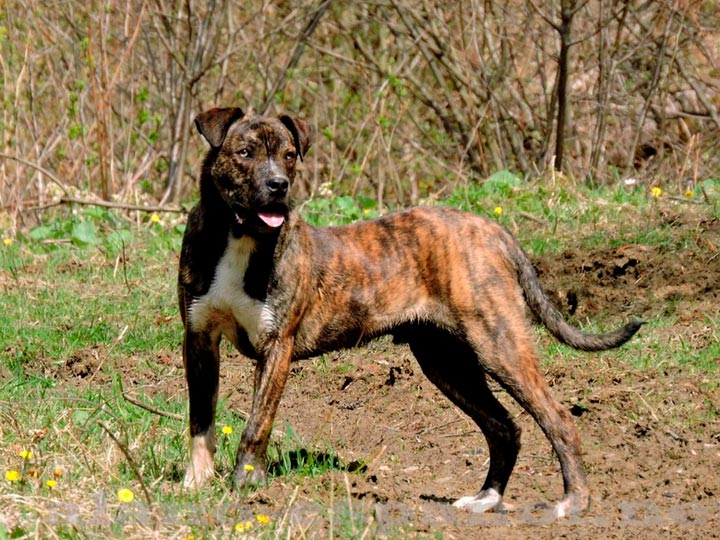
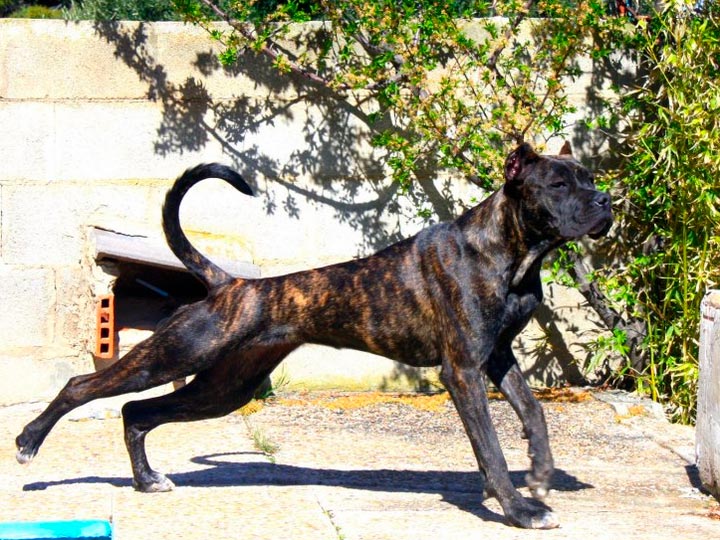
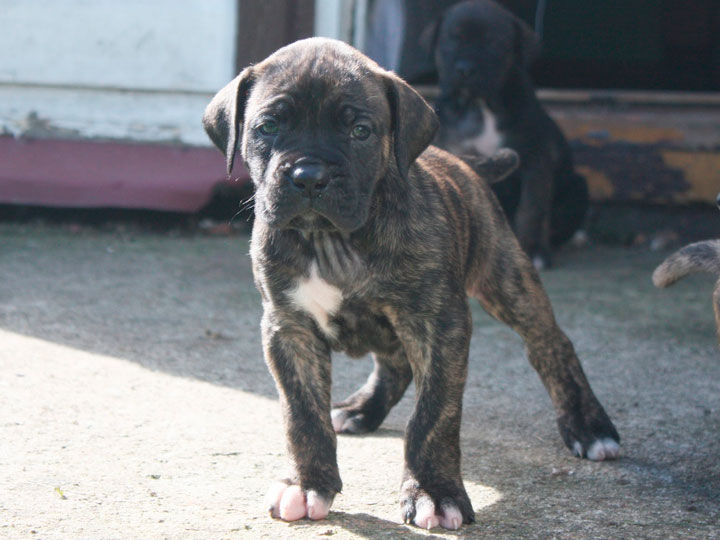
The gallery contains photos of Alano dogs (Alanese dog, Italian bulldog).


Add a comment