
Chin Acne in Cats: Causes and Treatment
Acne is a skin condition caused by inflammation of the sebaceous glands. In cats, acne is most often localized on the chin or corners of the mouth, and less commonly on the abdomen or at the base of the tail. This selective localization is explained by the fact that these areas contain the largest number of sebaceous glands.
Main features
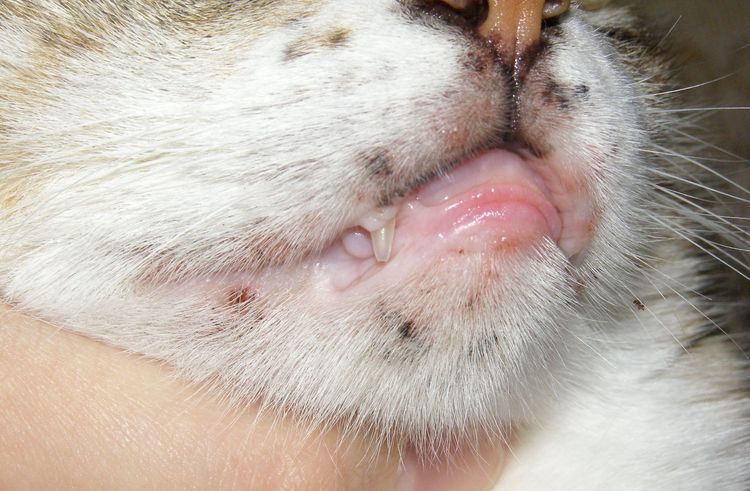
Acne appears as small nodules (comedones) with black or white tips that grow over time and may become infected. These skin lesions are commonly called blackheads. In photographs, clusters of small comedones appear as untidy, dirty patches of skin.
There are several successive stages of acne development:
- inflammation and swelling of an area of skin:
- formation of dense subcutaneous nodules;
- maturation of comedones with the appearance of a purulent spot on their top;
- opening of pustules;
- formation of drying crusts.
The disease causes severe itching, causing the cat to scratch constantly. The scratches can lead to the formation of pustules, which impede healing. If the wounds become infected, the cat may develop purulent-necrotic inflammation of the sebaceous glands or hair follicles.
Good to know: A cat with acne cannot infect a person or animal, since this disease is caused by a malfunction of the glands, and not by pathogenic microorganisms.
Reasons
The direct cause of acne is the malfunction of the subcutaneous glands that produce sebum and disruption of the keratinization process. The dead, upper layer of the epithelium should exfoliate and be replaced by new cells. If this exfoliation does not occur, the dead cells, like plugs, clog the pores, leading to the formation of distinctive white or black subcutaneous nodules.
A cat's susceptibility to acne doesn't depend on its breed or age. Factors that are believed to trigger acne in cats include:
- skin diseases;
- pathologies of the development of sebaceous glands or hair follicles;
- improper metabolism,
- reduced immunity;
- hormonal imbalances;
- poor liver function;
- predominance of fatty foods in the cat's diet;
- Poor hygiene (in particular, infrequent washing of the cat's food or water bowl can cause acne on the cat's chin).
Diagnostics
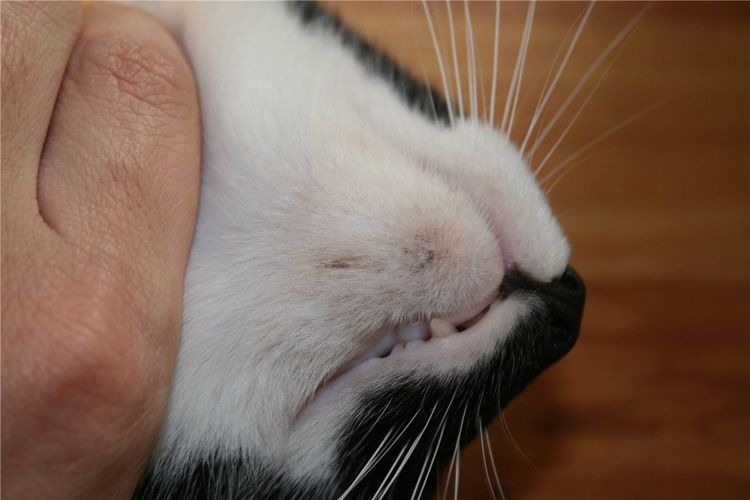
To make an accurate diagnosis, your veterinarian will perform a physical examination of your pet and order a series of laboratory tests. Acne has a very typical appearance.
However, it should be understood that acne on an animal's chin may be a sign of another disease with similar symptoms:
- sebaceous gland tumors;
- demodicosis or scabies (skin lesions caused by microscopic mites);
- dermatophytosis (lichen, a disease caused by dermatophyte fungi Microsporum canis, Microsporum gypseum and Trichophyton);
- eosinophilic granuloma and other skin diseases of allergic origin;
- leprosy (a skin disease caused by the bacteria Mycobaterium lepraemurium);
- eggs of ectoparasites laid on the surface of the skin (fleas, lice, biting lice);
- insect bites.
To differentiate acne from other conditions, the cat undergoes a complete blood count and serological analysis, which helps identify the possible causative agent (bacteria, viruses, protozoa). A tissue sample from the affected areas is also tested for bacteria. If a fungal infection is suspected, a Wood's lamp can be used to confirm the diagnosis.
Treatment
Treatment methods for feline acne depend on the severity of the condition. If comedones are few and not festering, topical medications are sufficient. In cases of advanced disease, oral medications are used.
Caution! Only a veterinarian can determine how to treat acne in cats. Self-medication is dangerous. Squeezing even a single comedone on your cat's chin is strictly prohibited.
The local therapy regimen is usually as follows:
- Acne-affected areas of skin are treated with antiseptics several times a day. These can include salicylic alcohol, hydrogen peroxide, or calendula tincture. There are also special skin antiseptics, such as Miramistin, Chlorhexidine, and Percutan. These can be used. tar soap or medicinal shampoos from Hartz and Bifar.
- If purulent crusts appear, the affected areas are treated with a solution of the antibiotic Bactroban (Mupirocin).
- If inflammation is severe, a course of treatment with prednisolone ointment may be prescribed.
- Nourishing ointments are rubbed into the skin, disinfected with an antiseptic. They dry out comedones and prevent the formation of pustules. These can be purchased at a veterinary pharmacy. Yam ointment, Levomekol, salicylic, zinc, sulfur, tetracycline ointments or Liniment synthomycin.
Apply a thin layer of ointment to the affected area and leave it on for about half an hour, then gently remove any remaining ointment with a cotton swab. Do not allow your cat to lick the ointment.
In advanced cases, a veterinarian may prescribe a two-week course of systemic antibiotics for your cat. The most commonly used are AmoxicillinEnrofloxacin or cephalosporin medications: Cefazolin, Cefuroxime, Cefotaxime, Cefepime. These are given to the cat as tablets or intramuscularly; the dosage is determined by the veterinarian.
Folk remedies can provide good results in treating acne. Among the most popular recipes are:
- Celandine decoction. Pour 2 tablespoons of the herb into 0.5 liters of water, bring to a boil, steep, and cool. Use the strained infusion for poultices.
- Chamomile decoction with furacilin. Pour a cup of boiling water over a tablespoon of chamomile flowers, let steep for half an hour, covered, then strain. Crush two furacilin tablets and mix with three tablespoons of chamomile infusion. Apply this mixture to the affected areas several times a day.
- Yarrow decoction. Brew a tablespoon of yarrow flowers in a glass of water and gently wipe the affected areas of the skin with the resulting decoction, without damaging the comedones.
A prerequisite for complex acne therapy is diet: foods high in fat are excluded from the cat's diet until the acne has completely disappeared.
Prevention
Preventing cat acne is very simple. First and foremost, ensure the cleanliness of your cat's food and water dishes and the hygiene of your cat. Feeders and water bowls should be washed daily. Ceramic or metal food and water bowls are best. Plastic bowls easily harbor bacteria due to their large pores. If your cat's chin gets dirty while eating, wipe it with a clean, damp cloth; an antiseptic solution can be used instead of water.
If your cat is prone to skin conditions like acne, limit fatty foods in their diet. A well-balanced and varied diet containing sufficient nutrients, vitamins, and minerals will help strengthen your cat's immune system and better combat potential illnesses.
Read also:
- Can a person become infected with ringworm from a cat?
- Eosinophilic Granuloma in Cats: Symptoms and Treatment
- Scabies in cats: symptoms and treatment


Add a comment