
Afghan Hound: Dogs
The Afghan Hound is a beautiful dog breed. Today we've prepared a detailed description of the breed, photographs, and lots of useful information about this amazing dog.
Content
History of the breed's origin
The Afghan Hound is one of the oldest dog breeds, whose ancestors originally had a very wide range of habitats. However, since European travelers first encountered these dogs in Afghanistan, it was decided to give the breed a similar name.
Since ancient times
Much evidence suggests an ancient origin for this breed. Rock paintings of dogs resembling Afghan hounds, found in Iranian caves, date back to the 10th to 9th centuries BC. Later paintings with similar images of dogs, dating back to the 2nd century BC, were discovered in caves in eastern Afghanistan.
Perhaps there would be more evidence of Afghan hounds' existence in the distant past if Muslims (and it was Muslims who first used hounds for hunting in desert conditions) had left behind any evidence of their companionship. However, since the Islamic religion prohibits depictions of animals alongside humans, little information remains about the existence of Afghan hounds in those times. However, it is known for certain that Muslims considered Afghan hounds "pure" animals, unlike other dogs, and revered them for their courage, agility, and speed in hunting.
There is a legend about a sultan who ruled in the 10th century. In gratitude for his help in defending against the Indian invasion, the sultan named the city Tazi after the greyhounds.
Before them days
The breed's existence in Europe only became known towards the end of the 19th century, when the story of the legendary Indian dog Zardin captivated the world. During his lifetime, he won over 50 shows and even lived in an English royal palace. The pinnacle of his popularity came with a victory at a canine show in the UK. At the same time, the English Kennel Club recognized the Afghan Hound breed and established a standard based on the legendary dog's appearance. A short time later, Zardin was acquired by a dealer, and his trail was lost.
It is known that this dog sired several puppies in England, but no documentation was created for them, so the legendary dog's name does not appear in modern Afghan hound pedigrees. Nevertheless, Zardin is considered the founding father of the modern Afghan hound.
- The first edition of the English Afghan Hound standard of 1925 was based on a complete description of Zardin's external characteristics.
- A little later, another cynological association issued a standard, which lasted for just over twenty years, until 1946.
- Later, in 1965, the Fédération Cynologique Internationale (FCI) issued a standard based on the previous English standard, which is still in use today. But even there, Zardin's influence is quite clearly visible.
Afghan hound puppies were first brought to the Soviet Union in the 1960s. In 1985, the All-Union Cynological Council adopted the Afghan hound standard. However, the FCI Standard for Afghan hounds is currently used in member countries of the Federation Cynologique Internationale (FCI), including Russia.
Breed description and standards
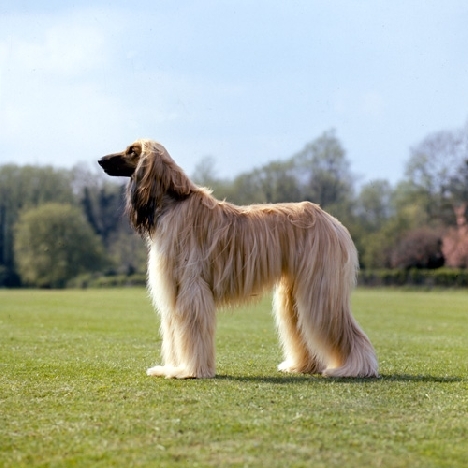
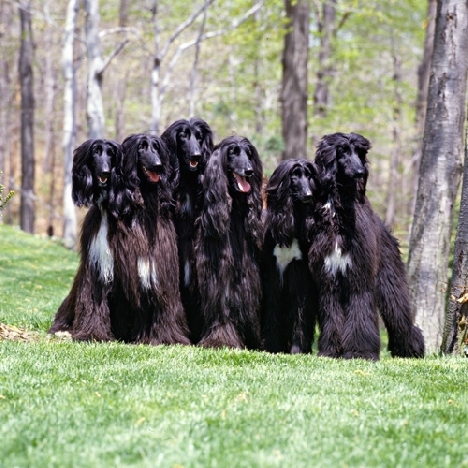
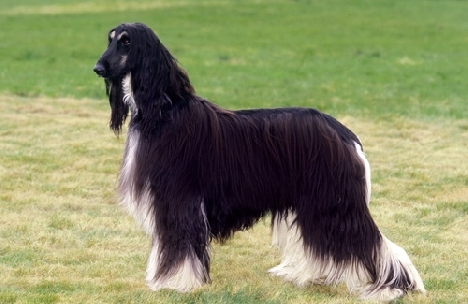
The Afghan Hound is a large dog, standing approximately 70 cm tall, combining outstanding speed with an elegant appearance. Its head is carried slightly elevated. Its appearance evokes strength and nobility. Its color ranges widely, from light silver, light blue, and light apricot tones to dark gray and even black.
Muzzle
The head is wedge-shaped with a prominent occipital protuberance. The forehead, fairly flat but not too narrow, is concealed by a long fringe. The elongated muzzle is equipped with powerful, strong jaws capable of instantly seizing and tearing prey. The bite is scissor-like. The nose is preferably black, but a dark brown nose is acceptable in light-colored breeds. Eye color ranges widely from golden to dark. The eyes are triangular in shape and set at a slight angle. The Afghan Hound's ears are long and hang close to the head. Visually, the ears are difficult to discern, as the thick, long fur blends with the coat on the dog's head.
Body
The neck of this breed is long and well-developed. The tail is medium-length and distinguished by its almost complete absence of long hair. The tip of the tail is curled into a ring. The anatomy of the limbs is characterized by a well-developed musculoskeletal system: long and thick bones adapted to fast running. The muscular corset of the fore and hind limbs is well developed. The dog's front paws are quite large, while the hind paws are slightly different and narrower. The fur on the paws is long and dense. The dog has a long body with well-developed muscles. The body is slightly lowered toward the pelvic bone. The thoracic spine is slightly curved.
The Afghan Hound has a very long coat. The coat is longest on the body and limbs. In adults, the hair along the spine is shorter and thicker. The paws and ears are thicker and longer. Strands of silky hair fall across the forehead, and the facial area is covered with short hair. The recommended weight for this dog is 23 to 27 kilograms.
Breed character
Today, the Afghan Hound is a relatively peaceful and calm dog, showing no aggression toward other dogs and being quite tolerant of people. But this wasn't always the case. The first puppies bred by the British were particularly aggressive and unruly. Even in the 1950s, Afghan Hounds with a strong temperament were common. Subsequently, to avoid such misunderstandings, breeders became more careful and allowed only docile dogs to breed. Thus, the Afghan Hound's personality has undergone significant changes through selective breeding. Nevertheless, this breed has not lost its guarding skills. The dog guards everything at all times: its place at a show, the territory around the house, and its place in the apartment. An Afghan Hound warns strangers with a growl and bark, and may lightly bite, but will only pursue them to the point where its territory ends.
Afghan hounds are generally considered quite independent dogs. It takes a lot of effort to tame a dog with such a personality. They obey commands, but training them is extremely difficult. Afghan hounds are extremely intelligent and have a very good memory and sense of smell. They can recognize people or animals even after many years.
It has been noted that Afghan hounds obey children much better than adults.
At first glance, it may seem as if the dog is aloof and doesn't show the proper respect and affection for its owner. However, this is only an illusion; when separated from its owner for long periods, these dogs become very bored and disoriented. This breed matures extremely slowly – the dog only becomes reserved and sedate by the age of 6-7.
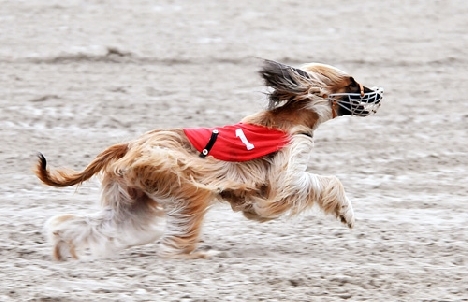
Afghan hounds exhibit strong hunting instincts, which should be kept in mind during walks, as they can start chasing a squirrel or a stray cat at any moment. Afghan hounds have excellent eyesight; spotting a bird in the sky several hundred meters away is no problem for them. Afghan hounds have an incredible sense of smell and are excellent at navigating their surroundings. Once led along a specific route, they will always find their way back. Therefore, if you lose your Afghan hound, wait for it where it left, or better yet, at home, as it will certainly find its way home on its own.
Care
Afghan Hounds have very long, thick, and silky coats that require careful daily grooming. Dogs with this length of coat are recommended to be washed with special shampoos and conditioners at least once a month. After washing, the hair is carefully combed and then thoroughly dried with a hairdryer or air-dried. Dry shampoos are also acceptable in situations where a full bath is not possible. This dog should be brushed daily and very thoroughly. A special stiff metal comb and a natural bristle brush are recommended for this purpose. After each brushing, the hair should be carefully styled; small braids of the longest hairs are acceptable to prevent tangling.
During cold and dry weather, it may be necessary to use special anti-static products. Get your Afghan Hound used to being brushed from puppyhood, so that by the time your puppy reaches adulthood, regular brushing becomes a habit. It's best to brush your puppy while standing or lying on its side.
Content
Many breeders agree that buying an Afghan hound for a city apartment without using it for hunting is absolutely unacceptable. After all, in an urban environment, the dog will be doomed to a life of inconsistency. A completely free life is also unsuitable for such a dog, as its coat requires constant grooming. The ideal option for such dogs is a fenced enclosure with access to a closed area for rest. Of course, hunting with an Afghan hound in modern conditions can be challenging, so long, active games in an open area with other large dogs are quite suitable. Afghan hounds should be allowed to run and play in an open area for at least an hour a day.
It's worth noting that special care should be taken when walking Afghan hounds, as these dogs are completely unafraid of cars and may run onto the roadway. Therefore, areas for free-roaming should be chosen very carefully. Ideally, it should be a designated dog walking area or a large, fenced-in area outside the city.
Health
Afghan hounds are fairly healthy. With proper care and maintenance, Afghan hounds live an average of 13 to 15 years. Ophthalmological problems are rare in Afghan hounds. Ear infections are slightly more common in these dogs, as their thick coat prevents air from reaching the ears. Exercise should be moderate; excessively fast running is as undesirable for these dogs as complete inactivity. This is especially true for puppies.
Due to their mountainous origins, Afghan hounds tolerate cool, humid climates well, but heat is detrimental to them. Therefore, during periods of extreme heat, walks should be limited to 15-20 minutes to avoid heatstroke. These dogs have a relatively low pain threshold, so they tolerate physical pain very poorly. If Afghan hounds are not housed properly, which is common in dogs acquired solely for pet purposes, they may develop cardiovascular and musculoskeletal problems.With proper care, the average lifespan of an Afghan Hound is 9 to 12 years.
Feeding
Afghan hounds are relatively undemanding when it comes to food. They don't overeat, meaning the risk of developing related health conditions such as obesity or metabolic disorders is extremely low. They can easily determine their optimal portion size themselves. Sometimes, Afghan hounds will have fasting days, eating little or nothing, which is completely normal.
General principles
An Afghan Hound's diet should be balanced in vitamins and minerals, and include sufficient amounts of fatty acids (omega-3 and omega-6). The protein, fat, and carbohydrate content of the diet should be fully balanced and meet the individual dog's needs. An Afghan Hound's diet should include:
| Protein-rich foods | healthy carbohydrates and fiber-rich foods for proper digestion | foods rich in calcium and healthy fats |
| beef, lamb, rabbit meat, chicken, beef kidneys, heart and liver, fish, eggs | all types of cereals, raw and stewed vegetables | fermented milk products, cod liver, fish oil, bone meal |
Afghan hounds can be fed high-quality commercial food, but this may not provide them with the necessary nutrients. Therefore, the optimal diet for this dog is a mixed diet, which includes both natural food and commercial food.
Diet
The number of meals per day for an Afghan Hound depends on its age:
- From 2 to 4 months – 5 meals a day;
- From 4 to 6 months – 4 meals a day;
- From 6 to 12 months – 3 meals a day.
- It is recommended to feed an adult Afghan Hound 2-3 times a day.
Mixed diet
An approximate mixed diet for an adult dog.
- The dog's first morning feeding should include a small amount of porridge cooked in meat broth (for example, many dogs prefer buckwheat porridge in chicken broth); you can add a little kefir or another fermented milk product to the porridge.
- Lunch should include boiled meat with added vegetables (many dogs love raw vegetables: cabbage or carrots); sometimes boiled eggs, vegetable oils, or fish oil can be added to the lunch.
- Evening feeding can consist of a serving of high-quality, ready-to-eat dry food. When feeding dry food, ensure your dog always has access to clean drinking water.
Three times a week, feed your dog 300-500 grams of raw meat. You can increase the amount of raw meat in your dog's diet during cold weather, periods of increased physical activity, during pregnancy and lactation, and during recovery from illness.
Cost and nuances of buying a puppy
The optimal age for purchasing a puppy is 4 months. At this age, the puppy is already strong enough, begins to show independence, and more easily copes with the stress of moving and separation from its mother.
- The cost of an Afghan hound puppy from a registered kennel with a vaccination passport will start from 15,000 rubles.
- If you are interested in purchasing a puppy for further breeding or participation in exhibitions - from 20,000 rubles.
When purchasing a puppy from an official kennel, the owner receives full instructions on care, feeding, and maintenance, as well as all accompanying documents. If you are purchasing a puppy for show, be sure to check for a uniform coat and the absence of white spots, which are critical when evaluating a dog at a show.
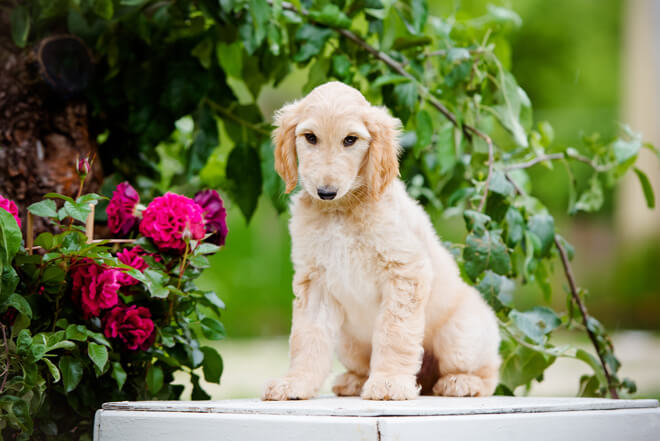
Puppies priced over 5,000 rubles can often be found for sale from amateur breeders, but these puppies are unlikely to meet the standard in appearance, and they usually lack vaccination records. Afghan hound puppies are very cute and sweet little bundles of joy. Their coat is still underdeveloped, so a potential buyer might think they won't require much grooming. This would be a mistake, as your puppy will need daily brushing, starting from a very young age. Therefore, if you're considering purchasing an Afghan hound puppy, approach this decision responsibly and consciously, as caring for such a dog is quite labor-intensive and time-consuming.
Photos
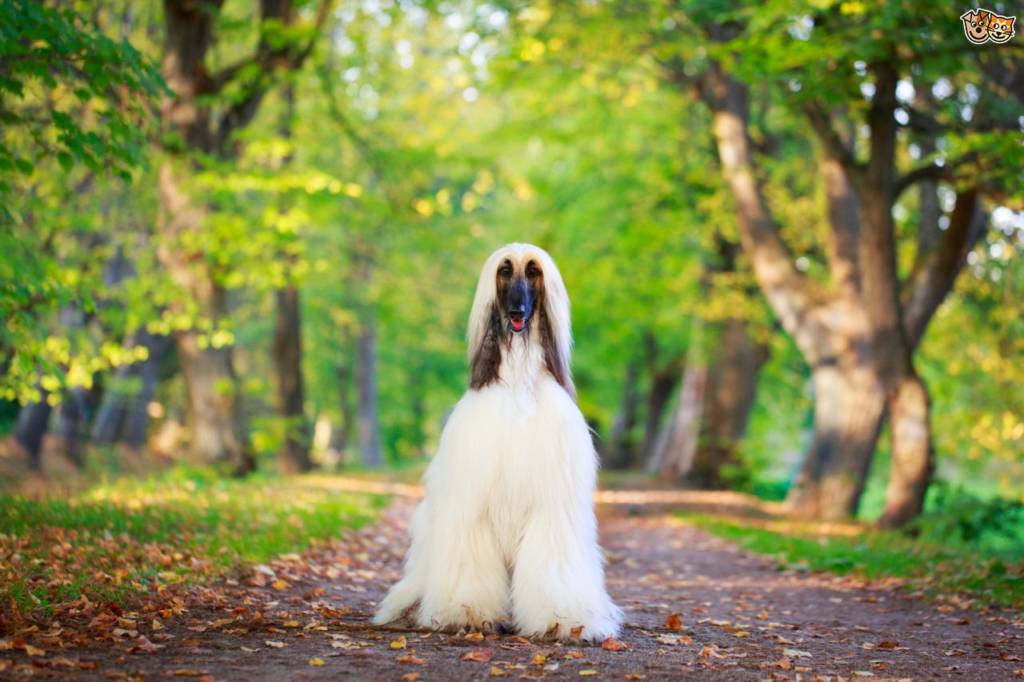
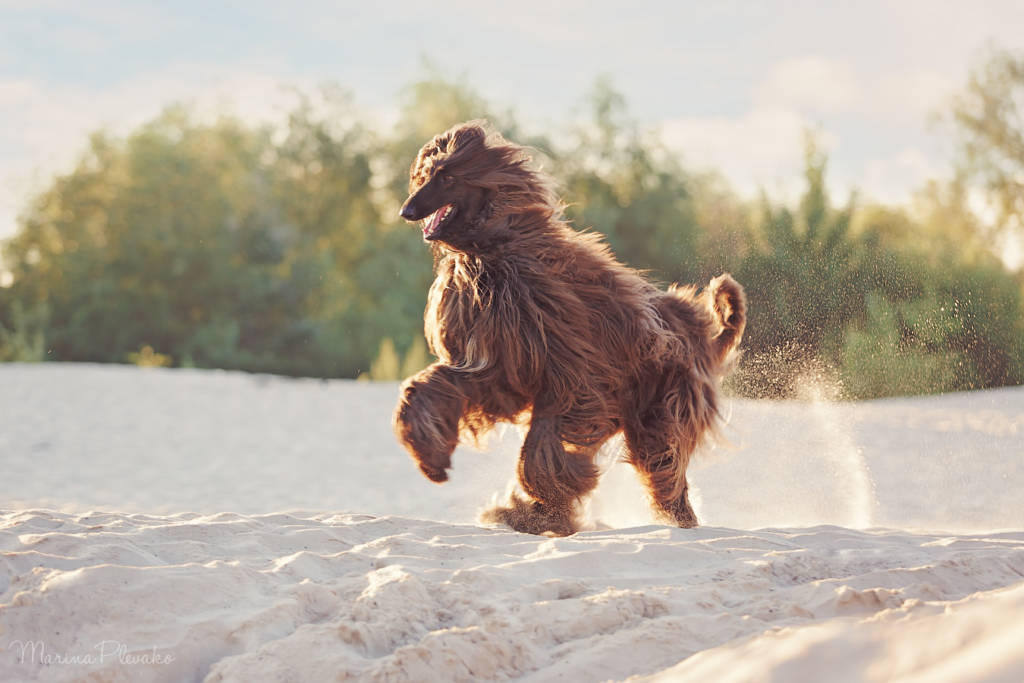
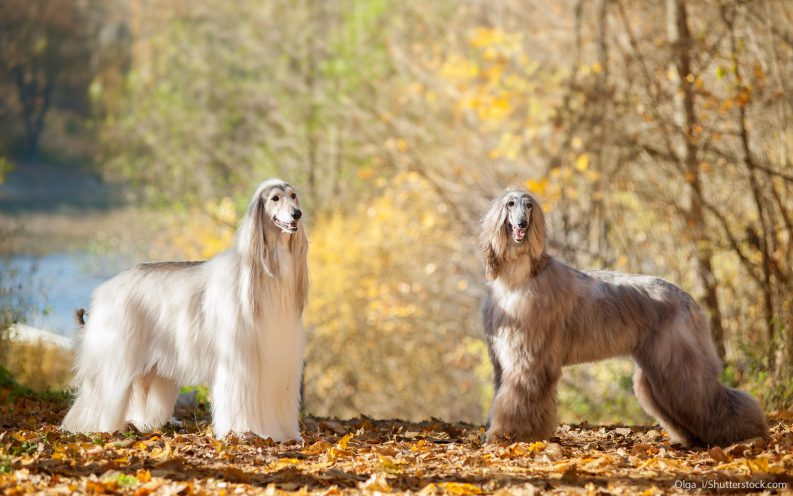
Afghan Hound Photos:
Read also:


Add a comment