
Dog Paw Abscess: Cause and Treatment
An abscess on a dog's paw is a fairly common occurrence, regardless of the animal's breed, age, or other physiological characteristics. Simply put, it's a pustule that forms in the deep or superficial layers of the skin.
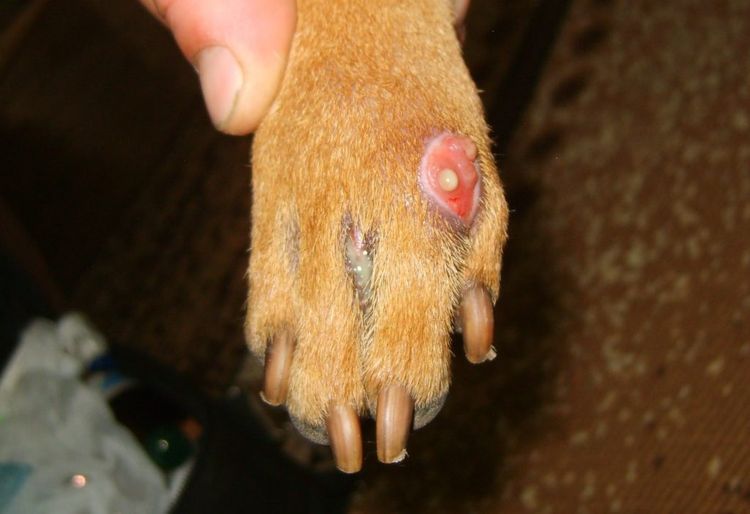
It can be very small in size or grow to the size of a chicken egg. An abscess is separated from healthy skin by a so-called demarcation line—a bright red halo that clearly delineates the boundaries of the inflammation. An abscess can form not only on the extremities but also on other parts of the body—the back, head, abdomen, and even on internal organs.
Varieties
The following types of abscesses are distinguished:
- Benign. Typically the result of unsuccessful vaccinations, injections, blows, and injuries. It appears as a reddish swelling, the cavity of which is filled with thick purulent fluid.
- Malignant. Appears as watery, red bumps, soft to the touch, containing liquid pus.
- Cold. The lump ripens slowly and almost never bursts spontaneously. This is usually a "diagnosis" of older dogs with weakened immune systems.
- Hot. Develops quickly, accompanied by a rise in body temperature. The swelling is painful and often ruptures on its own.
Causes of occurrence
The main triggers for abscess formation are wounds and injuries. While out for a walk, a dog may bump into or scratch itself against a tree, concrete pole, metal corner, or other objects, causing inflammation at the site of the injury and the formation of an abscess. The paws and head are often the "hits."
The problem may also arise for the following reasons:
- Not all hygiene rules for animal care are followed. The dog comes into contact with sharp objects and can inadvertently injure itself. While out for walks, it rummages through trash, picks up dirty items, and tastes them. Stray dogs are particularly at risk of developing abscesses.
- The animal has a quarrelsome nature and often fights with its fellows. Conflicts over sexual interests and the competition for females also occur. In intact males, the risk of prostate disease increases with age, which can lead to the development of an abscess. In females, the mammary glands are a vulnerable area.
- Ingrown hairs. A seemingly harmless condition can trigger the formation of a purulent capsule at the site of the blockage.
- Insufficiently sterile conditions in the clinic where the injection or other medical procedures were performed.
- Accidents. The dog has suffered a serious injury or a serious physical injury. A foreign object (splinter, thorn, glass) may remain in the open wound, which can trigger the decay process.
- Human cruelty. Not only stray dogs but also a small percentage of domestic animals are at risk.
- Licking and sucking various objects into the mouth. This is typical for puppies, who are exploring the world this way. This usually indicates inflammation of the gums and oral mucosa.
Important: Some breeds are naturally predisposed to developing abscesses, such as Labradors, Shar-Peis, and English Bulldogs.
Internal abscesses result from untreated wounds or foreign bodies remaining in the body. These debris include bark residue, microparticles of tissue, glass, and other objects not previously removed from the wound.
Symptoms
A superficial abscess is fairly easy to detect. Visually, it appears as a small, firm lump. When the affected area is touched, the dog may whine and show signs of restlessness. The skin over the abscess becomes swollen and reddish.
Cone It grows rapidly and can double or triple in size within a few days. In the final stages of maturation, the abscess feels as if it's about to burst. Under the pressure of the large amount of pus, the tissues may not be able to withstand the strain, and spontaneous rupture occurs.
A deep abscess is not detectable with the naked eye. It can only be detected by secondary signs, such as:
- Animal lethargy;
- Lack of appetite;
- Increased body temperature;
- Drowsiness.

At the slightest suspicion of such a reaction, it is necessary to take the dog to the veterinarian for an X-ray or ultrasound. Since the symptoms are similar to those of hematomas and hernias, blood tests and lab punctures may also be performed.
Treatment
According to statistics, almost every second dog will experience an abscess in their lifetime. With proper and timely treatment, this problem is not dangerous. Typically, it involves superficial suppuration of the subcutaneous tissue. Cases of internal abscesses, especially those that rupture spontaneously, are very rare. Treatment is usually with antibiotics.
An abscess can be treated in hospital or at home.
- Surgical approach. The abscess is lanced with a scalpel after it has fully matured, the wound is thoroughly cleaned of any remaining pus, and treated with an antiseptic. If necessary, a drain is placed for 3-4 days, and the dog is brought in daily for a dressing change. A course of oral antibiotics is prescribed, although this is not necessary. In some cases, prophylactic homeopathic remedies are sufficient.
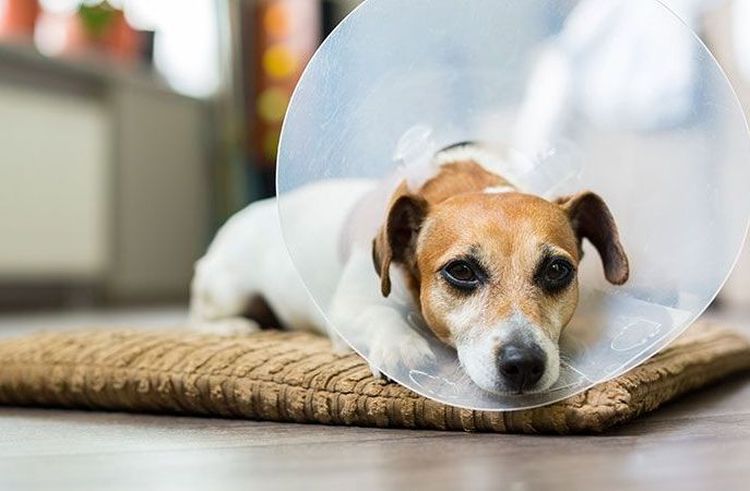
Important: To prevent the dog from licking the wound and to allow it to dry, it is recommended to put a special collar on the muzzle.
If the lump turns out to be malignant, then removal is performed only surgically under local or general anesthesia.
- Folk remedies. Often, an abscess ruptures on its own, but there's no way to take the dog to the vet. In such cases, don't panic—the body is capable of healing on its own, regardless of the size of the opening or the amount of pus released.
Warm compresses made with herbal infusions, such as celandine, plantain, or chamomile, can be used to disinfect and relieve pain. A bandage or cotton cloth folded several times is soaked in the infusion and applied to the affected area for 10-15 minutes. Repeat this procedure 3-4 times a day at regular intervals.
Calendula and St. John's wort solutions are also effective for wound cleaning. Add 10 drops of each herbal tincture to 1 cup of boiled water, plus a quarter teaspoon of table salt. Mix the mixture thoroughly, draw it into a syringe, and apply to the wound. The treatment lasts 4-7 days, depending on the healing rate.
Echinacea tincture is used to boost immunity. You can buy it at a pharmacy and take it according to the instructions, or prepare it yourself and give your dog 5 drops three times a day.
Prevention
Of course, it's impossible to protect your pet from all illnesses and physical injuries. It's only possible to minimize the risk of contracting a disease or sustaining an injury. To reduce the chances of developing an abscess, it's recommended to follow a few rules:
- Avoid fighting with other animals, even in play.
- Regularly conduct veterinary examinations for the presence of purulent infections.
- Observe basic hygiene rules.
- Ensure that injections are given only with new disposable syringes and that injection sites are thoroughly disinfected.
- Make sure that there are no cracks, scratches or cuts on the paws.
Read also:
- Lumps on a dog's hind legs: causes and treatment
- Ceftriaxone for dogs
- Dog Vaccination: Vaccination Schedule


Add a comment