
Common problems with cats and kittens at home
Cars, dogs, and, of course, people who might hit a harmless animal or throw a rock at it. These are the threats that await cats on the streets. But have you ever considered that home might not be the safest place for our pets either? And in most cases, danger lurks in the most unexpected places. How can you make your home safe?
Content
Risk of gastric and intestinal obstruction
There are things that can cause serious health problems in cats, and these items should be kept as far away from your pet as possible.
Toys
Unfortunately, many cat toy manufacturers don't care about our pets' health. Have you ever noticed that small plastic mice are quite easy to chew? After a few days, they turn into irregularly shaped, sharp pieces of plastic. If accidentally swallowed, they can damage the delicate lining of the intestines or stomach. Much less commonly, cats swallow small objects, pins, buttons, tinsel, or thread.
Bin
Out of curiosity or in search of something edible, cats peek into trash cans. They eat the delicious-smelling pieces of plastic. At best, they'll pass out undigested in their feces.
Toilet filler
An adult cat or male cat most often knows the true meaning fillerBut kittens often taste it, either out of curiosity or to replenish missing minerals. In the stomach, the pellets quickly absorb water and form a dense, insoluble lump. Therefore, it's best to choose wood litter that crumbles into sawdust.
The main symptoms of gastric obstruction or intestines is lethargy, refusal to eat and drink, gagging, vomiting, constipationIn case of intestinal obstruction, vomiting may not occur.
Poisonous and toxic substances
What toxic substances in the home pose a danger to pets? What should you keep out of reach of your whiskered companion? How can you make your home safe?
Self-medication
Most medications are available over-the-counter and can be used without a doctor's prescription. These are typically used to treat headaches, colds, and other upset stomachs. But medications that help people can be toxic to cats. For example, regular paracetamol.
Household chemicals
Detergents used daily for cleaning and tidying also pose a danger to our animals. Of course, a cat won't drink strong-smelling liquids or chew laundry detergent. But they may step in spilled detergent or on a freshly cleaned surface.
Naturally, the cat will lick off any residue left on its paws. Also, avoid using detergent to clean cat bowls.
Houseplants
Cats, especially those with outdoor access, often chew on houseplants. And if you think your pet knows which ones are poisonous and which are beneficial, you're mistaken. The following plants pose the greatest health risks: aloe, yucca, monstera, dieffenbachia, begonia, cyclamen, primrose, oleander, and ivy. Also, some flowers in the Asteraceae family.
Try to minimize the risk of poisoning and offer your cat an alternative option, in the form of sprouted oats or special grass.
Signs of intoxication may include general weakness, vomiting, loss of coordination, twitching of the paws, and in some cases, epileptic seizures.
Various injuries
Some objects in the house can seriously injure your pet. How can you make your home safe?
Glass
First of all, these are the glass balls on the Christmas tree that cats love to play with. A dropped ball breaks, and the cat can be seriously injured by the shards.
Furniture
When cold weather arrives, cats often sleep under covers. Try not to sit on your pet. Also, be careful when folding a sofa or closing a dresser drawer. There have been cases where a cat, hiding, has gone unnoticed and been crushed.
Windows
Cats often die because their owners fail to notice danger in open windows. A cat might jump after a bird or butterfly. Some do so because of the call of a littermate or simply because of sudden noises.
An open window sash for ventilation poses no less of a danger, as a cat could get stuck in the narrowest part. Don't rely on mosquito nets, as they easily fall out under a cat's weight and are torn by sharp claws. The best option is to install special combs or protective nets.
After a fall from a great height, injuries are often internal. Therefore, the sooner the animal is taken to the clinic, the better its chances of recovery.
Washing machine
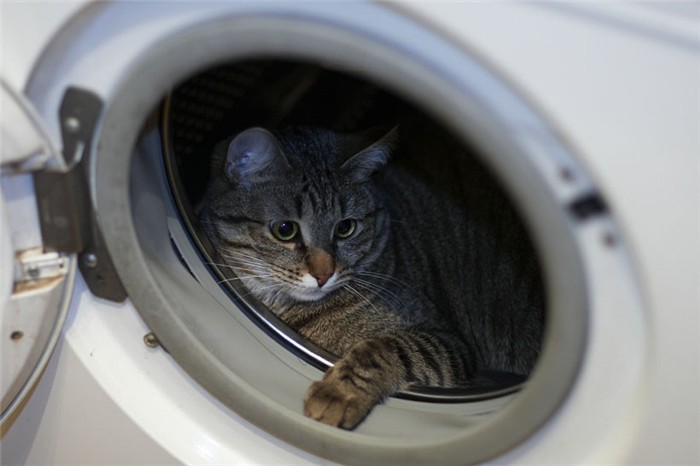
The favorite resting place for most cats is the washing machine drum. And there have been cases where owners turned on the machine without noticing the cat. Unfortunately, it's impossible to talk about a happy outcome here.
Children
Such cohabitation can be unpredictable and dangerous for both the child and the cat. But we're talking about cats. When expressing affection, children don't always use the right amount of force and can harm a kitten. And during playtime, a child might feed the animal play dough, throw it in a bathtub full of water, or groom it, cutting off a piece of skin and fur. Try to prevent this from an early age. teach child on how to communicate correctly with animals.
Infectious diseases
What else is dangerous for a cat?
Shoes and dirty hands
Yes, we are often the cause of various feline diseases. Most fungi, viruses, and bacteria are brought into the house on shoes and hands. Shoes can also carry worm eggs, so the idea that there's no point in giving deworming medications and vaccinations to indoor cats is a misconception.
Be attentive to your pets and take care of their safety.
Read also:
- Will a cat get along with a small child in the house?
- What kind of grass do cats like and eat?
- Kitten Eating Litter: Why and What to Do


Add a comment